
How to Declutter a Laundry Room and Keep It Organized
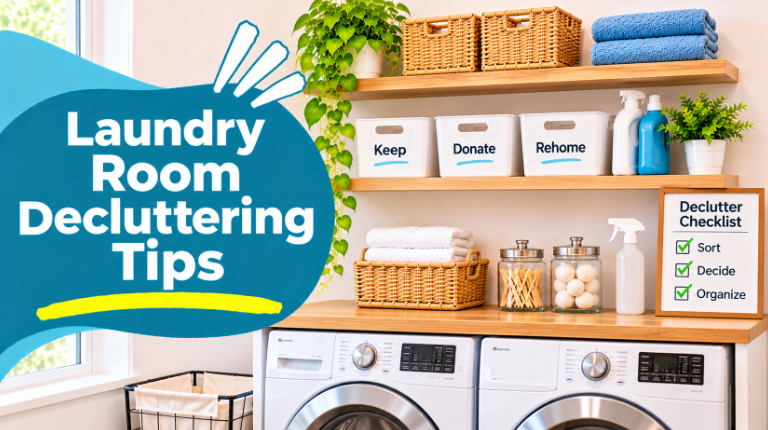
How to Declutter a Laundry Room and Keep It Organized
A laundry room can become cluttered surprisingly quickly. Empty detergent bottles, unused baskets, cleaning products, folded towels, and miscellaneous household items often compete for the same limited space. Before long, shelves become crowded and the laundry area feels more difficult to use.
The good news is that you do not need new cabinets or expensive organizers to fix the problem. Decluttering what you already own and creating a simple storage system can make your laundry room feel cleaner and more functional.
Whether you have a dedicated laundry room, a small closet, or a compact laundry corner, these steps can help you get the space under control.
1. Remove Everything That Does Not Belong
Start by looking at everything stored in your laundry room. You may find items that have gradually accumulated but have little to do with laundry.
Common examples include:
- Unused household decorations
- Empty product containers
- Old cleaning cloths
- Random tools and accessories
- Shopping bags and packaging
- Items that belong in another room
Remove anything that does not need to stay in the laundry area. Return misplaced belongings to their proper locations and dispose of unnecessary packaging appropriately.
This simple step creates more room without requiring you to purchase anything.
2. Sort Laundry Supplies Into Categories
Once you have cleared unrelated belongings, group the remaining items by purpose.
Create categories such as:
Laundry products: Detergent, fabric softener, and stain-removal products.
Laundry accessories: Mesh bags, clothespins, and measuring accessories.
Cleaning tools: Suitable brushes, cleaning cloths, and other household tools.
Linens: Clean towels, washcloths, and other household fabrics.
Backup supplies: Unopened products and extra accessories.
Grouping items makes it easier to identify what you have and prevents several similar products from being scattered across different shelves.
It also helps you notice duplicate supplies before purchasing replacements.
3. Review Products and Remove Unnecessary Items
After sorting, review each category individually.
Check containers to see whether they are empty, damaged, or no longer needed. Follow the product label and local disposal instructions when getting rid of unwanted products.
Avoid keeping partially used products simply because you have space for them. If you no longer need something, consider an appropriate disposal method rather than allowing it to occupy valuable storage space.
Keep useful products in their original containers, with their labels and instructions intact.
The American Cleaning Institute provides a helpful Laundry Room Safety Checklist, including reminders about product instructions, spills, and proper storage practices.
4. Clear and Reorganize Your Shelves
Crowded shelves make a laundry room look messy, even when you have enough storage space.
Remove everything from each shelf and decide which items deserve to return.
A practical arrangement could be:
- Top shelf: Lightweight backup supplies
- Middle shelf: Frequently used laundry accessories
- Lower shelf: Suitable baskets and folded towels
Keep heavier belongings in stable storage and avoid placing products where they could fall.
If your shelves are too crowded, consider moving occasional-use items to another suitable storage area instead of adding more containers.
5. Reduce the Number of Baskets and Hampers
Laundry baskets are useful, but having too many can make a small laundry room difficult to navigate.
Count the baskets you actually use and decide whether each one has a purpose.
For example, you may only need:
- One hamper for lights
- One hamper for darks
- One basket for towels or household linens
- One portable basket for clean clothes
If your space is limited, a divided hamper can replace several separate baskets.
Keep frequently used hampers accessible and store collapsible baskets elsewhere when they are not needed.
6. Organize Small Accessories in Containers
Small laundry accessories can easily become scattered across countertops and shelves.
Use a few practical containers to keep them together. You might create separate sections for mesh laundry bags, clothespins, reusable accessories, and cleaning cloths.
Choose containers that fit your existing shelves. You do not need matching decorative baskets or expensive organizers to create a tidy appearance.
Clear containers can be helpful for non-chemical accessories because their contents are easy to identify.
Keep detergents and laundry products in their original packaging rather than transferring them into decorative jars or unmarked containers.
7. Keep the Floor and Appliance Area Clear
A clutter-free laundry room should have enough open space to move baskets, load appliances, and access storage comfortably.
Remove unnecessary objects from the floor, especially around the washer and dryer.
Avoid storing cardboard boxes, laundry piles, or unrelated household belongings near appliances.
The U.S. Consumer Product Safety Commission's dryer safety alert explains why keeping the dryer area clear and cleaning lint screens and exhaust ducts regularly are important safety practices.
Follow the manufacturer's instructions for appliance maintenance, and ask a qualified professional for help with servicing or ventilation work.
8. Create a Simple Storage System
After removing unnecessary items, give everything that remains a designated place.
You can organize the room into a few practical zones:
- Washing supplies near the washer
- Laundry accessories in a small basket
- Clean towels on a dedicated shelf
- Hampers near the sorting area
- Backup supplies in a suitable cabinet
This arrangement makes it easier to return items after use instead of leaving them on countertops or appliances.
Keep cleaning products securely stored according to their labels and away from children and pets.
9. Maintain Your Laundry Room With a Weekly Reset
Decluttering once is helpful, but maintaining the space prevents clutter from gradually returning.
Set aside a few minutes each week to:
- Return supplies to their designated places.
- Remove empty packaging.
- Fold and put away clean towels.
- Empty laundry baskets when needed.
- Wipe shelves and surfaces.
- Check for unnecessary items.
- Keep the appliance area clear.
You can also review your laundry supplies before shopping so you do not purchase products you already have.
Final Thoughts
Decluttering a laundry room does not require a complete makeover. Removing unrelated belongings, grouping supplies, reducing unnecessary baskets, and creating simple storage zones can make the space easier to use.
Start with one shelf or cabinet rather than trying to reorganize everything at once. Keep only useful items, give everything a designated place, and maintain the system with a short weekly reset.
With a little consistency, your laundry room can stay cleaner, more spacious, and much easier to manage.
Leave a Reply