
How to Declutter Your Home Without Feeling Overwhelmed
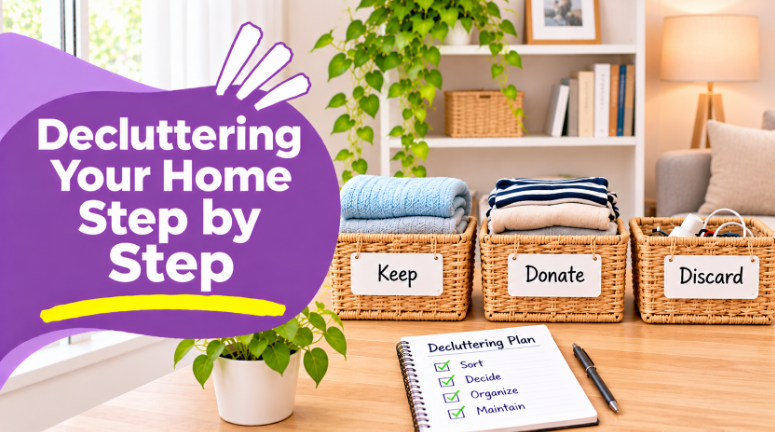
Looking at a cluttered home can make it difficult to know where to begin. Closets may be full, kitchen drawers may contain things you rarely use, and everyday belongings can gradually take over countertops and shelves.
The biggest mistake is trying to organize the entire house in one day. Decluttering works better when you break the process into smaller tasks, make thoughtful decisions, and create a simple plan for maintaining your progress.
Whether you are organizing a small apartment or a larger home, these practical steps can help you get started without turning the project into an overwhelming task.
1. Start With One Small Area
Instead of looking at your entire home as one big project, choose a specific area to work on.
Good starting points include:
- One kitchen drawer
- A single bathroom shelf
- A small section of your closet
- A coffee table or countertop
- One storage basket
Choose an area that can reasonably be completed in one session. Finishing a small task gives you a clear result and helps you understand what works before moving on to a larger space.
The National Education Association's decluttering guide also recommends identifying priorities and working through manageable sections rather than attempting everything at once.
2. Set a Realistic Time Limit
You do not need an entire weekend to make progress.
Choose a manageable amount of time based on your schedule. For example, you could spend 15 or 20 minutes organizing one drawer or shelf.
Before starting, decide exactly what you want to accomplish. Instead of writing "organize the bedroom," make your goal more specific, such as "sort the top dresser drawer."
A simple timer can help you stay focused and prevent one task from taking over your day.
When the time is up, finish putting away the items you have sorted. Avoid starting another large area if you do not have enough time to complete it.
3. Prepare Four Sorting Categories
A sorting system makes it easier to decide what should happen to each item.
Prepare four containers, bags, or clearly separated areas:
Keep: Belongings you regularly use, need, or genuinely want to keep.
Donate: Useful items in good condition that someone else may appreciate.
Recycle or discard: Items that are broken, unusable, or no longer suitable for donation. Follow local recycling and disposal guidelines.
Relocate: Belongings that are useful but stored in the wrong room.
This approach helps prevent items from simply moving from one cluttered surface to another.
The American Cleaning Institute's decluttering guide explains the four-box method and offers additional suggestions for sorting household belongings.
4. Ask Simple Questions Before Keeping Something
Deciding what to keep can sometimes be more difficult than organizing the space itself.
When you are unsure about an item, ask a few practical questions:
- Do I use this regularly?
- Does it serve a purpose in my home?
- Do I already own something that does the same job?
- Is it in usable condition?
- Do I have an appropriate place to store it?
You do not need to apply the same rules to every belonging. Important documents, sentimental objects, seasonal supplies, and emergency essentials may need to be kept even if they are not used frequently.
Give yourself time to make decisions, especially when an item has personal meaning.
5. Work Through Similar Items Together
Once you have completed one small area, consider grouping similar belongings from that space.
For example, when organizing a bathroom drawer, gather hair accessories, skincare products, and everyday toiletries into separate groups.
This helps you identify duplicates and understand how much storage each category actually needs.
You can use the same approach in other rooms:
- Kitchen: Group utensils, food containers, and baking supplies.
- Bedroom: Separate everyday clothing, accessories, and seasonal items.
- Living room: Group books, electronics, and decorative objects.
- Bathroom: Separate toiletries, towels, and personal-care accessories.
Keep the process focused on one room or category at a time so that belongings do not spread throughout the house.
6. Give Every Belonging a Designated Place
After deciding what to keep, choose a specific location for each category.
Frequently used items should be easy to reach, while occasional-use belongings can be stored in suitable cabinets, closets, or labeled containers.
For example:
- Place everyday kitchen utensils near the area where you prepare meals.
- Keep frequently used bathroom products in an accessible drawer.
- Store seasonal clothing in a designated closet section.
- Group household documents in an appropriate filing area.
Before purchasing new organizers, measure your available space and consider whether you can reuse containers you already own.
The goal is to make putting things away simple, not to fill every shelf with additional storage products.
7. Decide What to Do With Items You No Longer Need
Once your sorting is complete, deal with the items you have decided to release.
Useful belongings in good condition may be donated to an organization that accepts them. Contact the organization first to confirm its current donation requirements.
Some items may be suitable for reuse, resale, or recycling. Others may need to be discarded according to local waste guidelines.
For more ideas about responsible reuse and reducing household waste, visit the New South Wales Environment Protection Authority's waste-reduction guide.
Try not to leave donation bags and sorting boxes sitting around indefinitely. Decide on a suitable next step for each category so that the cleared space stays clear.
8. Avoid Organizing More Than You Can Finish
One common problem is emptying an entire closet or cabinet before having enough time to finish organizing it.
This can temporarily make the room messier and create extra work.
Instead, follow a simple sequence:
- Choose one small area.
- Remove the items from that area.
- Sort them into your categories.
- Clean the empty surface if needed.
- Return the belongings you are keeping.
- Move the remaining items to their appropriate destinations.
Complete one section before moving on to another.
If you encounter a particularly difficult area, divide it into even smaller sections. There is no need to rush.
9. Create a Simple Weekly Decluttering Routine
Once you have organized a few areas, small maintenance habits can help prevent clutter from accumulating again.
Try this straightforward routine:
Daily: Return frequently used belongings to their designated places.
Weekly: Choose one small drawer, shelf, or surface to review.
Monthly: Check storage areas for unnecessary duplicates and items that no longer belong there.
Seasonally: Review clothing, household linens, and seasonal belongings as your needs change.
You can adjust this schedule to suit your home. The important thing is to choose a routine that is realistic enough to maintain.
Final Thoughts
Decluttering your home does not have to be a large, exhausting project. Starting with one small area, using clear sorting categories, and giving belongings designated places can make the process much easier to manage.
Focus on useful improvements rather than trying to make every room perfect at once. Complete one section, decide what happens to the items you no longer need, and maintain your progress with simple weekly habits.
With a practical plan and a little consistency, you can create a home that feels more organized and works better for your everyday routines.
Leave a Reply