
How to Organize a Small Apartment With Kids
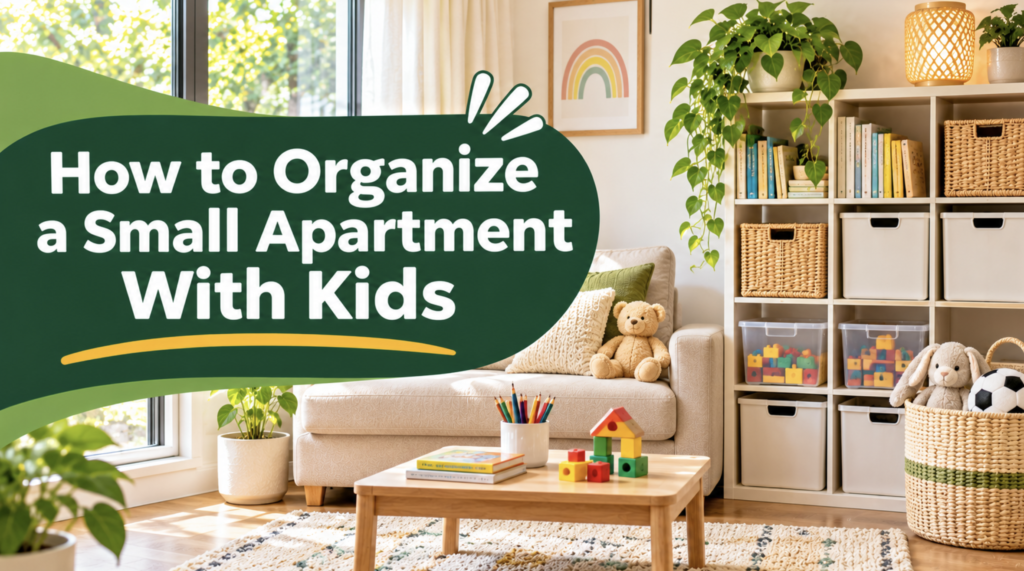
Living in a small apartment with kids can make everyday organization feel like a moving target. You clear the living room in the morning, and by lunchtime, toys, books, shoes, and art supplies have found their way back onto the floor.
The answer isn't to hide everything or expect your home to look spotless all day.
To organize a small apartment with kids, create designated areas for everyday activities, keep toys in accessible storage, and establish simple routines that work for your family's schedule.
Here are practical ways to make shared spaces easier to use without turning your apartment into a collection of storage bins.
1. Give Each Activity Its Own Space
Children don't necessarily need a separate playroom, but having a predictable place for their belongings helps.
Look at how your family uses the apartment. You may need areas for playing, reading, eating, sleeping, and schoolwork.
These areas can share furniture.
For example, a corner of the living room might become a play area, while the dining table doubles as a homework station.
Keep supplies near the activity they belong to. This reduces the need to carry toys and materials between rooms.
For more ideas about organizing shared living areas, see our guide to small living room organization.
2. Keep Everyday Toys Within Easy Reach
Children are more likely to participate in cleanup when storage is easy to understand.
Choose a few containers for toys they regularly use, and place them in an accessible location appropriate for their age.
Separate belongings into simple categories:
- Building blocks.
- Stuffed animals.
- Picture books.
- Art materials.
- Puzzles and games.
Avoid creating complicated systems with too many categories.
Open bins can be practical, but inspect containers for damaged edges and choose age-appropriate products.
The U.S. Consumer Product Safety Commission provides guidance about toy safety and household hazards.
3. Rotate Toys Instead of Displaying Everything
When every toy is available at once, even a small collection can take over an entire room.
Try keeping a manageable selection accessible while storing other age-appropriate toys in a separate location.
You can exchange some items periodically based on your child's interests.
This doesn't mean taking away favorite belongings. The goal is to reduce how many objects compete for space at the same time.
Before storing toys, check that all pieces are present and suitable for the children who may access them.
4. Use Low, Stable Storage Furniture
Low storage units allow children to reach everyday belongings without climbing.
However, accessibility should never come at the expense of safety.
Choose stable furniture, follow the manufacturer's assembly instructions, and secure units against tipping where required.
Avoid placing attractive toys on top of tall furniture, where children might try to climb to retrieve them.
The CPSC's Anchor It! campaign explains why securing furniture is important in homes with children.
Keep heavier objects on lower shelves and maintain clear walking paths.
5. Organize Children's Clothing by Daily Needs
Small bedrooms can become crowded when clothing, bedding, and accessories share limited storage.
Start by separating everyday clothes from seasonal items and garments that no longer fit.
Use available drawers for frequently worn clothing and assign separate sections for pajamas, socks, and school outfits.
Store clean seasonal garments in a dry, appropriate location.
If your apartment lacks built-in closets, explore our guide to organizing an apartment with no closets.
Keep frequently used clothing accessible to the adult or child responsible for putting it away.
6. Create a Simple School Supply Station
Homework supplies can spread across the dining table, kitchen counter, and living room.
Instead of creating a separate desk area when space is limited, use a portable container.
Store age-appropriate pencils, notebooks, paper, and other essentials together.
When homework is finished, return everything to the container and move it to its designated storage location.
Keep sharp tools and other potentially hazardous supplies secured according to the child's age and abilities.
This arrangement works particularly well when the dining table serves multiple purposes.
7. Simplify the Apartment Entryway
Getting everyone out the door becomes harder when shoes, backpacks, and jackets are scattered throughout the apartment.
Create a designated location for each family member's everyday items.
A suitable low shelf may hold shoes, while properly installed hooks can accommodate lightweight bags and jackets.
Keep the entrance clear of unnecessary belongings.
Our article on small entryway organization ideas offers additional ways to manage a narrow apartment entrance.
Make sure shoes, baskets, and backpacks don't obstruct doors or emergency exits.
8. Choose Safer Storage for Shared Spaces
Some storage solutions that work for adults are less suitable around young children.
Avoid using unstable shelving, accessible containers holding hazardous products, or heavy storage boxes that children could pull down.
Be particularly careful with enclosed storage chests. Choose products designed with appropriate safety features, and follow manufacturer instructions.
For everyday toy storage, accessible open containers may be simpler than heavy boxes with hinged lids.
Keep household chemicals, medications, and other hazardous items secured away from children.
9. Make Cleanup Part of the Daily Routine
A complicated cleaning schedule rarely works well in a busy household.
Instead, build short cleanup periods into activities that already happen.
For example, return toys before dinner, put school supplies away after homework, and collect misplaced belongings before bedtime.
Give children age-appropriate tasks and provide help when needed.
A younger child might put soft toys into a basket, while an older child may organize books or school materials.
Consistency matters more than achieving a perfectly tidy room.
10. Leave Room for Family Life
A small apartment doesn't need to look like a showroom.
Children need space to play, explore, and spend time with family.
Rather than trying to eliminate every visible toy, focus on keeping essential areas functional.
Ask yourself whether everyone can move comfortably, find their belongings, and use shared furniture without constantly clearing piles of clutter.
If a storage system requires too much effort, simplify it.
The best organization method is one your household can realistically maintain.
Final Thoughts
Organizing a small apartment with kids is about balancing storage, safety, and everyday family life.
Start with simple activity zones, accessible toy storage, and practical locations for clothes and school supplies.
Keep furniture secure, pathways clear, and cleanup routines manageable.
Your apartment doesn't have to remain perfectly tidy throughout the day. It just needs an organization system that helps your family live comfortably in the space you have.
Leave a Reply