
How to Organize a Small Bedroom Dresser
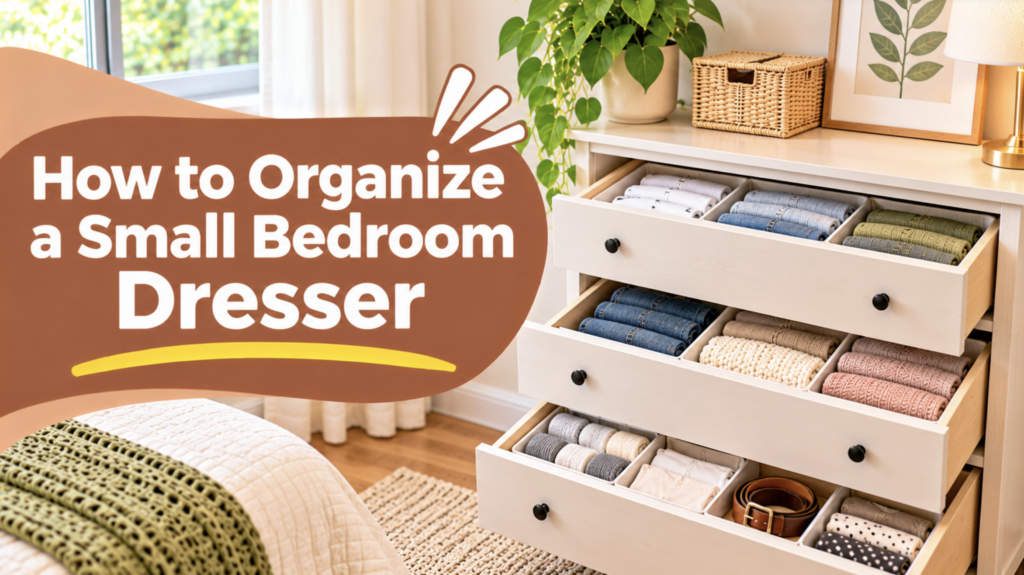
You open your dresser to grab a clean T-shirt, and suddenly you're digging through pajamas, socks, and clothes you forgot you owned. By the time you find what you need, the entire drawer is a mess.
Sound familiar? A small dresser can be surprisingly difficult to manage, especially when several clothing categories share the same limited space.
The best way to organize a small bedroom dresser is to empty the drawers, group clothing by type, assign each drawer a purpose, and use folding methods that make everything easy to see.
You don't need expensive organizers or a bigger dresser. Here's how to make your existing drawers work better.
1. Empty One Drawer at a Time
Start with a single drawer instead of emptying your entire dresser.
Remove everything and place the contents on a clean surface.
Look for clothing that belongs elsewhere, items that need washing, and pieces you no longer use.
While the drawer is empty, wipe its interior and let it dry completely.
Then check whether the drawer slides smoothly and closes properly.
Working one drawer at a time keeps the project manageable and prevents your bedroom from becoming covered in clothing.
2. Sort Your Clothing Into Clear Categories
Before putting clothes back, group similar items together.
Useful categories include:
- T-shirts and everyday tops.
- Jeans and casual pants.
- Socks and underwear.
- Pajamas and sleepwear.
- Workout clothing.
- Accessories.
You may also want to separate clothing by season if your dresser has limited capacity.
Avoid creating too many categories. A complicated system often becomes difficult to maintain.
If your dresser cannot accommodate everything, our guide on small bedroom storage without extra furniture explains how to use other existing spaces.
3. Give Each Drawer a Specific Purpose
One of the simplest improvements is assigning a clear function to every drawer.
For a dresser with three drawers, consider this arrangement:
| Drawer | Suggested Contents |
|---|---|
| Top | Socks, underwear, and small accessories |
| Middle | T-shirts and everyday tops |
| Bottom | Jeans, pajamas, or heavier clothing |
This is only an example.
If you wear workout clothes daily, they may deserve a more accessible drawer than occasional-use garments.
Arrange your dresser according to how you get dressed, not according to a rigid organizing rule.
4. Try Vertical Folding for T-Shirts
Traditional stacks can become messy when you pull a shirt from the bottom.
Vertical folding offers another approach.
Fold a T-shirt into a narrow rectangle, then fold it into a compact shape that can stand upright inside the drawer.
Arrange shirts in rows so you can see their edges.
This can make choosing a shirt easier without moving several others.
However, vertical folding isn't ideal for every fabric.
If soft garments collapse, use shorter stacks or an appropriately sized divider.
Choose the method that works with your clothing and drawer dimensions.
5. Use Dividers for Small Clothing Items
Socks and underwear can easily become mixed together in a wide drawer.
Dividers help create separate sections without requiring additional furniture.
You can use adjustable organizers, small fabric containers, or suitable boxes you already own.
Keep categories simple and leave enough room to retrieve items comfortably.
Before buying dividers, measure the drawer's interior width, depth, and height.
An organizer that is too tall may prevent the drawer from closing.
There's no benefit in adding compartments if they make your clothing harder to access.
6. Avoid Overfilling Your Drawers
A drawer that barely closes is telling you something.
When clothing is packed too tightly, removing one item can disturb everything around it.
Don't force extra garments into an already crowded compartment.
Move occasional-use clothing elsewhere or review whether everything inside still belongs there.
For example, thick winter sweaters may be better stored outside your everyday dresser during warmer months.
If you need alternatives for folded garments, see our guide on organizing clothes without a dresser.
Your drawers should open and close smoothly without excessive pressure.
7. Keep Frequently Worn Clothing Accessible
Think about which items you reach for most often.
Everyday clothing should be easy to find and retrieve.
If you wear T-shirts regularly, keep them in a convenient drawer rather than beneath several layers of seasonal clothing.
Reserve less accessible storage for occasional-use items.
This doesn't mean you need to rearrange your dresser every week.
A practical arrangement should reflect your normal routine and require only occasional adjustments.
8. Make the Top of Your Dresser Functional
Dresser organization isn't limited to the drawers.
The top surface often collects jewelry, chargers, receipts, skincare products, and miscellaneous belongings.
Choose a few items that genuinely need to remain there.
A small tray can keep everyday accessories together, while less frequently used belongings can move to appropriate storage locations.
Avoid placing heavy objects on an unstable dresser.
Follow the manufacturer's furniture anchoring instructions, especially in homes with children.
9. Keep Clean Laundry From Becoming Drawer Clutter
Even neatly organized drawers can become messy when clean laundry is put away in a hurry.
Instead of stuffing clothes into any available space, return each category to its assigned drawer.
Refold garments that have become unfolded during washing.
If a particular drawer repeatedly becomes overcrowded, reconsider its contents.
Our guide on keeping a small bedroom organized every day offers a manageable routine for preventing clothing from accumulating around the room.
Small habits make your dresser easier to maintain.
10. Review Your Dresser Every Few Weeks
Your storage needs can change as you rotate seasonal clothing, acquire new garments, or adjust your daily routine.
Occasionally, open each drawer and look for items that no longer belong there.
Return misplaced accessories and straighten clothing that has shifted.
Check whether any drawer has become difficult to open or close.
You don't need to empty the entire dresser every time.
A quick review can help you identify small problems before they become larger organizing projects.
Final Thoughts
Organizing a small bedroom dresser doesn't require a collection of expensive storage products.
Start by sorting your clothing, assigning clear purposes to each drawer, and choosing a folding method that makes garments easy to find.
Keep everyday essentials accessible and avoid packing drawers beyond their capacity.
The best dresser organization system isn't necessarily the most elaborate. It's one that makes getting dressed easier and putting clean clothes away feel simple.
Leave a Reply