
How to Organize a Small Bedroom With Two Beds
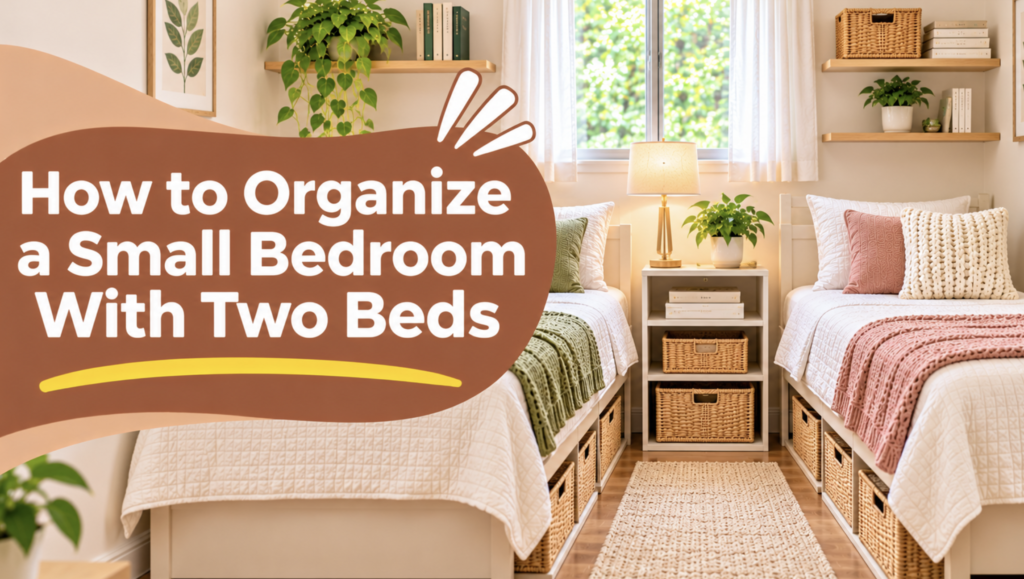
Fitting two beds into a small bedroom can feel like a game of furniture Tetris. You need enough room to sleep comfortably, but you also have to consider walking space, storage, doors, and possibly a dresser or desk.
The good news is that a small bedroom can accommodate two beds when the layout is carefully planned.
The best way to organize a small bedroom with two beds is to measure the room, choose a layout that preserves walking space, and use existing furniture for shared storage.
Here's how to make the most of your available space without overcrowding the room.
1. Measure the Room Before Moving Furniture
Start by measuring the bedroom's length and width.
Next, record the dimensions of both beds, including their frames rather than just the mattresses.
For reference, a standard U.S. twin mattress measures approximately 38 by 75 inches, although bed frames can be larger.
Mark the locations of:
- Doors and their opening paths.
- Windows.
- Closets and drawers.
- Electrical outlets.
- Heating and ventilation openings.
Sketch a simple floor plan or use removable painter's tape, where suitable, to visualize the beds' footprints.
Remember to allow space for people to move around and reach their belongings.
2. Try a Parallel Bed Layout
Placing two beds parallel to each other is a practical option for many rectangular bedrooms.
Position the headboards against the same wall, with a walkway between the beds.
This arrangement can make the room feel balanced while allowing each person to access their sleeping area.
If space permits, place one shared nightstand between the beds.
However, don't squeeze the beds together simply to create a symmetrical appearance.
The central walkway should remain comfortable and unobstructed.
3. Consider an L-Shaped Arrangement
An L-shaped layout places the beds along two adjoining walls.
This can work particularly well in square bedrooms or rooms where a parallel arrangement blocks important furniture.
Positioning beds against different walls may leave more open floor space in the center.
Before committing to this layout, check whether bedding can be changed comfortably and whether both beds remain accessible.
Avoid placing bed frames against heating equipment or obstructing windows that provide essential access or ventilation.
4. Make One Nightstand Serve Both Beds
Two separate bedside tables can occupy valuable floor space.
If the beds are close together, a single nightstand may provide enough storage for both occupants.
Choose a table with accessible compartments or shelves if you already own one.
Each person can have a designated section for books, glasses, or other everyday essentials.
Keep the tabletop clear enough for practical use.
If a shared table doesn't fit, consider whether existing nearby shelves can provide suitable individual storage.
5. Use the Space Beneath Each Bed
Under-bed storage can be especially valuable when two beds occupy much of the room.
Low-profile containers can hold extra bedding, seasonal clothing, and belongings that aren't needed daily.
Before choosing containers, measure the available clearance beneath both bed frames.
Keep each person's belongings in separate, labeled containers when appropriate.
Store only clean, dry items, and avoid blocking ventilation or electrical equipment.
Our guide to under-bed storage ideas for small bedrooms explains how to select containers and avoid common storage problems.
6. Keep Dressers Away From Narrow Walkways
A dresser may fit against a wall but still cause problems when its drawers are opened.
Before positioning one, check the space needed for full drawer extension.
Avoid placing dressers where they obstruct the doorway or prevent someone from reaching a bed comfortably.
If the room has limited floor space, consider whether existing closet shelves can accommodate some folded clothing.
For practical alternatives, see our article on organizing clothes without a dresser.
The goal is to keep essential storage accessible without creating obstacles.
7. Use Wall Space Carefully
When two beds occupy most of the floor, suitable wall storage may help keep belongings organized.
Existing shelves can accommodate lightweight books, decorative objects, or small storage containers.
However, avoid placing heavy or fragile items directly above sleeping areas.
Follow manufacturer instructions for mounting, weight limits, and furniture anchoring.
Keep wall-mounted storage away from doors and other areas where it could interfere with movement.
Don't install additional shelves unless they solve a genuine storage problem.
8. Keep the Area Between Beds Clear
The space between two beds often becomes a collection point for shoes, bags, and laundry.
Instead, treat this area as an important walking route.
Keep shoes in a designated storage location and return clothing to the closet or laundry hamper.
Avoid placing large baskets in narrow pathways.
If you're sharing the room, agree on where frequently used belongings should go.
Our guide on organizing a shared bedroom with limited space covers individual storage zones and shared responsibilities in more detail.
9. Consider Bunk Beds Only When Appropriate
Bunk beds can free up floor space by placing one sleeping area above another.
However, they aren't suitable for every room or household.
Check ceiling clearance, the manufacturer's age restrictions, guardrail requirements, ladder access, and weight limits.
The upper bunk should never be used by children younger than six years old.
Follow the manufacturer's instructions and applicable safety guidance before choosing this arrangement.
If standard twin beds already fit comfortably, there may be no need to replace them.
10. Keep the Room Easy to Maintain
A carefully planned layout works best when belongings are returned to their designated places.
Encourage each occupant to manage their own clothing, bedding, and personal storage.
Keep shared surfaces clear and avoid allowing laundry to accumulate between the beds.
A short daily reset can prevent clutter from spreading.
If an arrangement repeatedly creates problems, reconsider the furniture placement instead of adding more organizers.
Final Thoughts
Organizing a small bedroom with two beds starts with choosing the right layout.
Measure carefully, compare parallel and L-shaped arrangements, and make sure essential furniture remains accessible.
Use shared storage where practical and take advantage of suitable under-bed space.
Most importantly, preserve clear walking routes and choose a setup that supports the needs of everyone using the room.
Leave a Reply