
How to Organize a Small Bedroom With No Closet Space
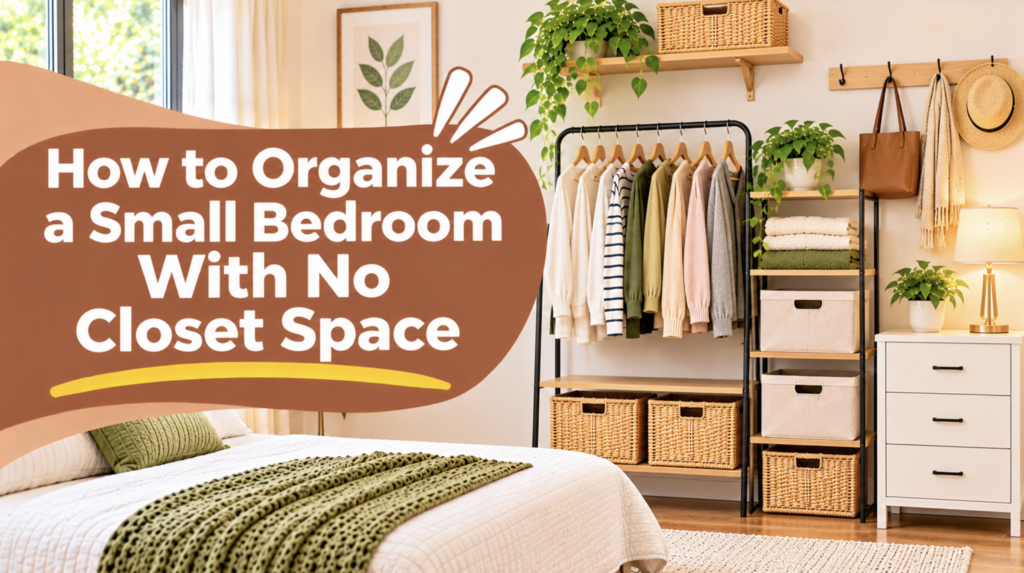
A bedroom without a closet presents an awkward problem: your clothes need somewhere to go, but every storage solution seems to take up space you don't have.
Maybe your jackets hang from the back of a chair, your shoes line the wall, and your freshly folded laundry stays on the bed because there's nowhere else to put it.
You can make a small bedroom work without a built-in closet. The key is to create one compact clothing zone, separate hanging garments from folded items, and protect the space around your bed.
Here's how to organize everything without turning your bedroom into a crowded storage room.
1. Choose One Wall for Clothing Storage
Before buying furniture, decide where your clothes should live.
Look for an available wall that doesn't interrupt access to the bed, windows, or doorway.
Ideally, your clothing storage should occupy one defined section of the room rather than spreading across several corners.
For example, you might place an existing dresser and a compact clothing rack along the same wall.
This creates a recognizable dressing area and keeps the rest of the bedroom available for sleeping and moving around.
Measure carefully before rearranging furniture.
2. Decide Between a Clothing Rack and a Wardrobe
Both options can work, but they solve different problems.
A freestanding clothing rack provides accessible hanging space and is often easier to move. However, clothing remains visible and may collect dust.
A wardrobe offers enclosed storage but generally requires more floor space and room for its doors.
Consider your wardrobe size, rental restrictions, and available clearance before making a purchase.
If you mostly wear casual clothing that folds easily, you may not need much hanging space.
Our guide to organizing clothes without a dresser explains how to handle folded garments without relying on traditional drawers.
3. Make a Simple Bedroom Floor Plan
You don't need professional design software to plan a functional layout.
Draw the room on paper and mark the locations of the bed, door, windows, and electrical outlets.
Add the measurements of any clothing storage furniture you're considering.
Then check whether you can:
- Walk comfortably between the bed and doorway.
- Open drawers and furniture doors.
- Access windows and ventilation.
- Reach everyday clothing without moving furniture.
If a wardrobe blocks access to the bed, a narrower clothing rack may be more practical.
The best arrangement preserves usable space, not just storage capacity.
4. Use Existing Shelves for Folded Clothes
If you have a bookshelf or another suitable shelving unit, it may provide storage for folded clothing.
Assign individual shelves to categories such as T-shirts, jeans, and sweaters.
Use appropriately sized containers for smaller garments that don't stack neatly.
Keep frequently worn clothes at accessible heights.
Follow the furniture manufacturer's stability, anchoring, and weight-limit instructions.
Avoid stacking heavy containers overhead or placing unstable furniture near sleeping areas.
5. Keep Under-Bed Storage for Occasional Items
The space beneath your bed can help compensate for missing closet storage.
However, it's usually better suited to belongings you don't need every morning.
Consider using appropriately sized containers for spare bedding, seasonal clothing, or occasionally worn accessories.
Measure the clearance beneath the bed before choosing boxes.
Make sure fabrics are clean and completely dry before storing them.
For additional guidance, see our article on under-bed storage ideas for small bedrooms.
Avoid filling the space so tightly that containers become difficult to remove.
6. Organize Shoes Without Creating Floor Clutter
Shoes scattered along a bedroom wall can make a small room difficult to navigate.
Choose one storage location for frequently worn pairs.
Depending on the space available, this might be the lower shelf of an existing unit or a compact shoe organizer.
Store occasional-use footwear separately.
Don't assume a large shoe rack is necessary. Measure your collection and available space first.
Keep shoes clean and dry before placing them near clothing or bedding.
Most importantly, avoid leaving footwear in the path between your bed and the door.
7. Give Bags and Accessories a Dedicated Place
Bags, scarves, belts, and hats often end up scattered because they lack assigned storage locations.
Group accessories by type.
Small containers can hold belts and scarves, while an existing shelf may accommodate handbags.
Properly installed hooks can be useful for lightweight accessories when suitable for the wall or door.
Avoid overloading hooks or hanging heavy items from unsupported fixtures.
Try to keep accessories close to your clothing area so getting dressed doesn't require searching the entire bedroom.
8. Reduce Visual Clutter Around the Bed
When clothing storage is open, the bedroom can feel busier even when everything has a place.
You don't need to hide every garment, but keeping the arrangement consistent helps.
Group hanging clothes by type, use a limited number of appropriately sized containers, and keep the floor around the bed clear.
Avoid adding decorative baskets unless they have a practical purpose.
If you already own enough storage, rearranging it may be more useful than buying matching organizers.
For broader ideas, explore our guide to small bedroom storage without extra furniture.
9. Keep Clean and Dirty Clothes Separate
Without a closet, it's easy for clothes to accumulate on chairs and other furniture.
Place a laundry hamper somewhere accessible but out of the main walkway.
Return clean garments to their designated storage areas.
If you plan to wear an item again before washing it, give it a separate, appropriate location.
Avoid leaving piles of clothing on the bed or floor.
A simple laundry system prevents your bedroom from becoming a temporary clothing storage area.
10. Review Your Setup After Using It
A storage arrangement may look practical on paper but feel inconvenient during everyday use.
After several days, pay attention to what works.
Can you reach your clothes comfortably? Are drawers easy to open? Do shoes keep ending up on the floor?
If one storage location is inconvenient, adjust it.
You may need to move a container, reorganize a shelf, or reduce the number of garments on your rack.
Small improvements are often enough to make the bedroom more functional.
Final Thoughts
Organizing a small bedroom without closet space requires thoughtful furniture placement and practical storage choices.
Start by creating one clothing zone, separating hanging garments from folded items, and keeping less frequently used belongings out of the way.
Protect your walking space and choose storage that's easy to access.
A bedroom without a closet can still be comfortable when your belongings have logical places and the room remains easy to use.
Leave a Reply