
How to Keep Your Laundry Area Organized Between Wash Days
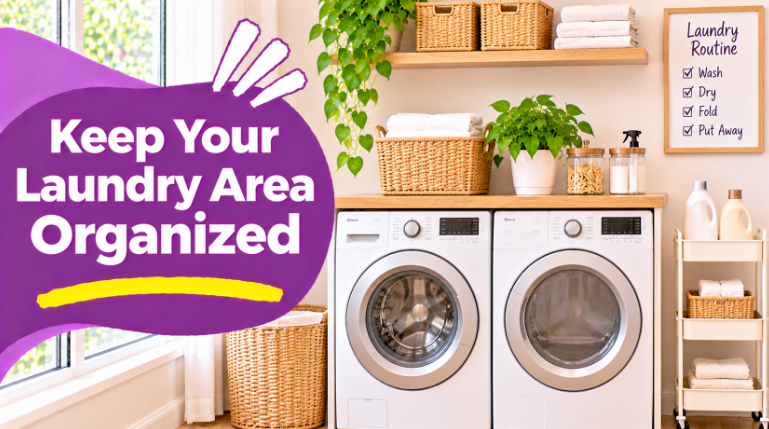
The laundry area can look perfectly organized right after a big cleaning session. But a few days later, empty detergent bottles, stray socks, laundry baskets, and piles of clothes can start taking over again.
It is easy to think that the solution is buying more storage containers or rearranging the entire room. In reality, keeping a laundry area organized often comes down to a few small habits that make sense for your everyday routine.
You do not need to clean the space from top to bottom every time you do laundry. The idea is to give everything a place, take care of small messes as they happen, and avoid letting unfinished tasks accumulate.
Here are practical ways to keep your laundry area tidy between wash days.
1. Give Every Laundry Essential a Permanent Place
Start by looking at the items you use most often. Detergent, laundry bags, clothespins, cleaning cloths, and spare hangers should all have designated storage locations.
If you regularly leave these things on top of the washer or dryer, choose a nearby shelf, cabinet, or basket where they can be returned after use.
A simple arrangement could include:
- One area for everyday laundry products
- A small container for accessories
- A basket for reusable laundry bags
- A shelf for clean towels and linens
- A designated place for empty laundry baskets
You do not need a separate organizer for every item. A few practical storage zones are usually easier to maintain than a complicated system.
2. Clear the Washer and Dryer Surfaces
The tops of laundry appliances often become convenient places to leave almost anything. A detergent bottle goes there temporarily, followed by a laundry basket, a few towels, and other household belongings.
Before long, the surfaces become crowded.
Try keeping appliance tops as clear as possible. Return laundry products to their designated storage locations after use, and move unrelated belongings to the rooms where they belong.
If you use the top of your appliances for storage, follow the manufacturer's instructions about suitable items, weight limits, and clearances.
A clear surface also makes it easier to notice spills or other issues that need attention.
3. Deal With Clean Laundry Before It Becomes Another Pile
One of the most common reasons laundry areas become cluttered is that clean clothes are left in baskets for several days.
Instead of waiting until you have time to put away every load at once, create a simple finishing routine.
After a load is dry:
- Remove the clothes from the dryer or drying rack.
- Separate garments that need hanging.
- Fold items that belong in drawers or shelves.
- Return everything to its designated storage area.
- Put the empty basket back where it belongs.
You can adapt this process to your schedule. If you cannot put everything away immediately, choose a specific place for clean laundry rather than leaving it on appliances or shared surfaces.
The American Cleaning Institute's Laundry Basics guide explains the importance of sorting garments, following care labels, choosing appropriate washing settings, and putting clean laundry away.
4. Keep Dirty Clothes From Spreading Around the Room
A laundry hamper only works if everyone knows where it belongs and uses it consistently.
Place hampers in convenient locations so dirty clothes do not end up on the floor, beside the washing machine, or over furniture.
If your space allows, you could use separate containers for:
- Everyday clothing
- Towels and household linens
- Delicate items that need special care
You do not need several large hampers. One divided basket or a simple laundry bag may be enough.
Empty the containers before they become difficult to carry, and return them to their designated locations afterward.
5. Review Laundry Supplies Before Buying More
It is easy to forget what you already have when products are stored in different cabinets or containers.
Before shopping for additional detergent, fabric-care products, or accessories, take a quick look at your existing supplies.
Group similar products together and keep backup items in one suitable location.
Check containers for leaks or damage, and follow their storage instructions. Keep laundry products in their original packaging, securely closed and away from children and pets.
Avoid buying extra products simply because they are on sale if you do not have a practical place to store them.
This small habit can prevent crowded shelves and unnecessary spending.
6. Make a Little Room for Folding and Sorting
A laundry area is easier to use when there is a clear surface for folding clothes or sorting a load.
If you have a countertop, avoid turning it into permanent storage for unrelated belongings.
If space is limited, a small folding table or a suitable portable surface may be more practical.
Keep the area clear between laundry sessions. Return baskets, hangers, and accessories to their assigned places when you finish.
The goal is to make the next laundry session easier to start without having to clear away a collection of unrelated items first.
7. Pay Attention to Moisture and Ventilation
Laundry areas can become humid, especially when clothes are air-dried indoors or appliances are not properly ventilated.
Pay attention to condensation, damp surfaces, or persistent musty odors. Allow wet areas to dry and address leaks or ventilation problems rather than simply covering them with storage containers.
The U.S. Environmental Protection Agency's guide to mold, moisture, and your home explains that controlling moisture and providing appropriate ventilation are important ways to reduce mold growth.
If you use a clothes dryer, follow its manufacturer's maintenance instructions. The U.S. Consumer Product Safety Commission's dryer safety alert recommends cleaning the lint screen regularly and keeping the area around the dryer free of clutter.
For appliance maintenance or ventilation problems, ask a qualified professional for help.
8. Create a Five-Minute Laundry Area Reset
You do not need a long cleaning session after every load. A short reset can help keep the space ready for the next time you need it.
Try this simple checklist:
- Return laundry products to their storage locations.
- Remove empty packaging.
- Put clean clothes away when possible.
- Place dirty clothes in the hamper.
- Return empty baskets to their designated spots.
- Clear the folding surface.
- Check that the appliance area is unobstructed.
You can do these tasks after finishing laundry or at the end of the day.
9. Review One Small Area Each Week
Even when you maintain your daily habits, shelves and cabinets can gradually collect unnecessary belongings.
Choose one small area each week to review. It might be a detergent shelf, an accessory basket, or a cabinet containing backup supplies.
Remove items that no longer belong there, wipe the storage area when necessary, and return useful belongings to their designated places.
There is no need to reorganize the entire laundry room every week. A small review is usually enough to catch clutter before it becomes difficult to manage.
Final Thoughts
Keeping your laundry area organized between wash days is not about cleaning constantly. It is about making everyday tasks easier by giving supplies a permanent home, putting clothes away, keeping surfaces clear, and maintaining a simple routine.
Start with one improvement, such as organizing your laundry products or clearing the folding area. Once that becomes part of your normal routine, add another small habit.
A functional laundry area does not have to look perfect. It simply needs to be ready for the next load without requiring another major cleanup.
Leave a Reply