
Small Entryway Organization Ideas for Apartments
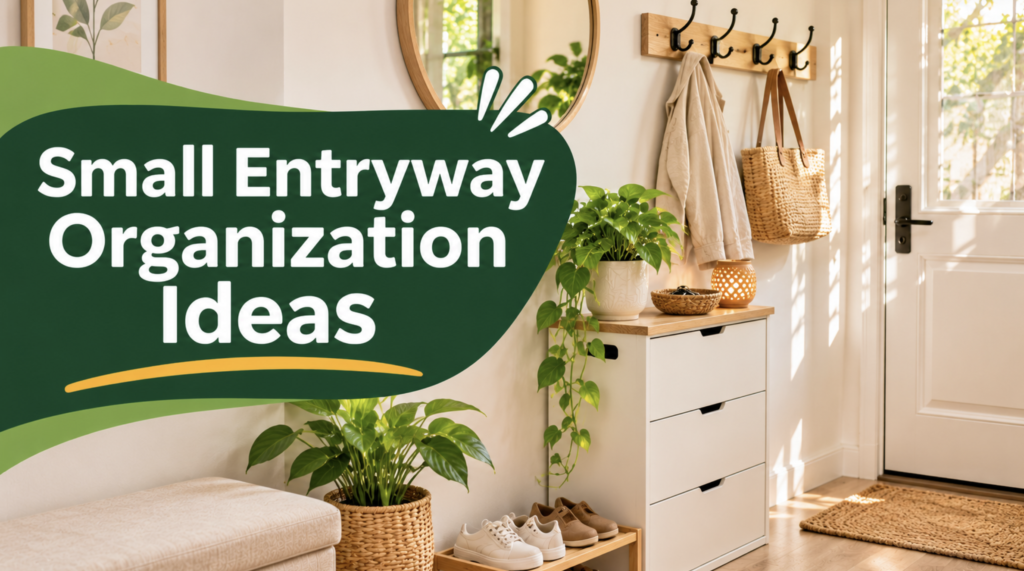
You walk through your apartment door, put your keys on the nearest table, drop your bag on a chair, and leave your shoes by the wall. By the end of the week, that little corner has become a collection of things you meant to put away.
The good news? Even an apartment without a dedicated entryway can have an organized drop zone.
The trick is to give everyday essentials a convenient home without blocking the door or adding bulky furniture. Here are practical small entryway organization ideas that work in narrow hallways, studio apartments, and homes where the front door opens directly into the living room.
1. Start With What Actually Belongs by the Door
Before buying an organizer, look at what usually collects around your entrance.
For most households, the list is surprisingly short: keys, shoes, bags, jackets, mail, and perhaps a dog leash.
Everything else can probably live somewhere else.
For example, keeping your entire shoe collection by the door makes little sense when you regularly wear only two pairs.
Move occasional-use belongings to their usual storage areas. If you're reorganizing other rooms, our guide to small apartment storage ideas offers ways to make room for them.
2. Give Your Keys One Consistent Spot
Searching for keys when you're already running late is frustrating.
A small dish on an existing shelf or a dedicated compartment in a nearby drawer can solve the problem.
Choose somewhere you naturally reach when entering the apartment.
Avoid leaving keys visible or easily accessible from outside, particularly near windows or doors with glass panels.
The important part isn't the container. It's returning your keys to the same location every day.
3. Keep Only Everyday Shoes Near the Entrance
Shoes are often the biggest source of entryway clutter.
Rather than lining several pairs along the hallway, choose a storage method that fits the available space.
A shallow shoe rack may work beneath an existing bench. A narrow cabinet can be useful when there's enough clearance for its doors.
In especially tight spaces, you may need to keep only one or two pairs near the entrance and store the rest in a closet.
Measure your hallway before choosing furniture, including the space needed to open the front door fully.
4. Use Wall Hooks Without Overcrowding Them
Wall hooks provide convenient storage without taking up much floor space.
They work well for lightweight coats, reusable shopping bags, and frequently used accessories.
However, five hooks don't necessarily mean you should hang five heavy bags in a narrow hallway.
Choose positions that won't interfere with opening doors or walking comfortably.
If you're renting, check your lease before installing permanent fixtures. Use mounting hardware appropriate for the wall and intended load.
5. Make a Tiny Drop Zone With Existing Furniture
Not every apartment needs a dedicated entryway table.
If there's already a suitable shelf, cabinet, or dresser near the door, reserve a small section for daily essentials.
For example, one surface could hold a key dish and a small mail tray while the drawers store items you don't need immediately.
Try to keep the arrangement simple.
When the surface becomes a dumping ground for receipts, packages, and miscellaneous objects, the system stops being useful.
6. Choose a Slim Bench Only If It Fits
An entryway bench gives you somewhere to sit while putting on shoes.
Some benches also offer storage underneath, making them practical for apartments with enough room.
But don't squeeze a bench into a hallway simply because it appears in decorating photos.
Check whether someone can pass comfortably while another person is seated.
If the space is too narrow, skip the bench. A clear walkway is more useful than an attractive piece of furniture that gets in the way.
7. Find a Better Place for Incoming Mail
Mail can turn a tidy entrance into a paper pile surprisingly quickly.
Create a simple sorting routine instead of leaving every envelope beside the door.
Use three categories:
- Action needed: Bills or letters requiring attention.
- Keep: Documents that belong in your filing system.
- Recycle: Unnecessary paper that contains no sensitive information.
Store sensitive paperwork securely, and shred documents containing personal information before disposal when appropriate.
If you have no room for a mail tray, sort incoming mail at your desk or another designated location.
8. Make the Entryway Work for Everyone
An organizing system is only helpful when the people living in the apartment can use it.
If several household members share the entrance, assign each person a small, practical storage location where space allows.
Children's everyday belongings should be accessible without requiring them to reach high shelves.
Avoid placing bags, racks, or other obstacles in walking routes.
If your apartment's front door serves as an emergency exit, keeping it clear is particularly important.
9. What If Your Apartment Has No Entryway?
Some studio apartments open directly into the kitchen or living room.
In that situation, create a small arrival station rather than trying to build a separate hallway.
A nearby drawer for keys, an existing closet for jackets, and a designated location for shoes may be enough.
You can also use a rug to visually define the entrance, provided it lies flat and doesn't create a tripping hazard.
For more ideas about making one room serve several functions, see our guide to studio apartment storage.
10. Keep Your Entryway Organized in Two Minutes
The easiest system to maintain is one that fits your routine.
Before going to bed, take a quick look at the entrance.
Put stray shoes away, return bags to their hooks, sort loose paperwork, and remove anything that belongs in another room.
If the same item repeatedly ends up on the floor, ask whether its assigned storage spot is too inconvenient.
Sometimes moving a basket or changing the location of a hook makes more difference than purchasing another organizer.
Final Thoughts
A small entryway doesn't need expensive furniture or elaborate storage systems.
Start by identifying what you actually use when entering and leaving your apartment. Give those belongings practical locations and keep everything else out of the way.
Whether you have a narrow hallway or a front door that opens directly into your living room, a few thoughtful changes can make arriving home feel less cluttered and much more convenient.
Leave a Reply