
How to Organize Clothes Without a Dresser
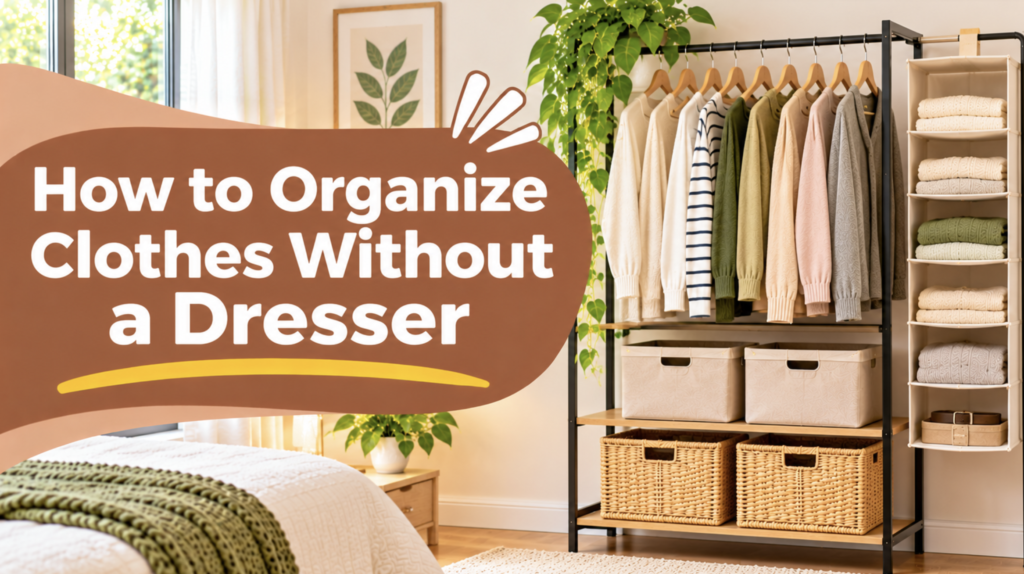
Not having a dresser can make getting dressed surprisingly frustrating. Your T-shirts end up on a chair, socks disappear into random baskets, and freshly folded laundry has nowhere to go.
But a dresser isn't the only way to keep clothes organized. Whether you're furnishing your first apartment, sharing a bedroom, or trying to save floor space, there are practical alternatives.
The easiest way to organize clothes without a dresser is to combine closet shelving, hanging organizers, and accessible storage containers. The right combination depends on your wardrobe, available space, and daily routine.
Here's how to create a system that keeps clothes easy to find without adding bulky furniture.
1. Sort Your Clothes Before Choosing Storage
Start by looking at the clothing you need to store.
Separate your wardrobe into categories:
- Shirts and T-shirts.
- Pants and jeans.
- Sweaters and sweatshirts.
- Socks and underwear.
- Sleepwear and workout clothes.
- Seasonal clothing.
Next, decide which garments need hanging space and which can be folded.
Dresses, jackets, and wrinkle-prone shirts often benefit from hangers. T-shirts, jeans, and many sweaters usually work well folded.
Knowing how much clothing belongs in each group will help you choose an appropriate storage arrangement.
2. Use Closet Shelves Instead of Drawers
If your closet has shelves, they can serve many of the same purposes as dresser drawers.
Assign each shelf to a specific clothing category.
For example, keep everyday shirts on one shelf and folded pants on another.
Avoid building tall stacks that collapse whenever you remove something from the bottom.
Shorter stacks are easier to manage, especially when shelves are deep.
For a complete closet setup, read our guide on how to organize a small closet.
Keep heavier belongings on stable lower shelves and frequently worn clothing within comfortable reach.
3. Try a Hanging Closet Organizer
A hanging fabric organizer can create separate compartments without requiring a dresser.
These organizers typically attach to a suitable closet rod and offer several open shelves.
You can dedicate individual compartments to T-shirts, jeans, pajamas, or other folded garments.
Before choosing one, check the available hanging height and the organizer's weight limit.
Also consider how much space it will take away from clothes hanging on the rod.
A hanging organizer is useful when you have enough vertical clearance, but it won't solve the problem if your closet is already overcrowded.
4. Store Socks and Underwear in Small Bins
Socks, underwear, and other small garments can become difficult to find when mixed with larger clothing.
Use separate, appropriately sized containers to keep these items organized.
A fabric bin on a closet shelf may work well.
If you already own small baskets, there's no need to purchase matching organizers.
Choose containers that allow you to reach the contents without removing several other boxes first.
Simple categories usually work better than complicated systems with too many compartments.
5. Make Use of Under-Bed Storage
If your closet is small or nonexistent, consider the space beneath your bed.
Low-profile containers can accommodate folded clothing without occupying another section of the bedroom.
This area is especially useful for:
- Seasonal sweaters.
- Extra pajamas.
- Occasionally worn clothing.
- Spare bedding.
Measure the clearance beneath your bed before selecting containers.
Store only clean, completely dry garments, and avoid areas with persistent moisture problems.
Our guide to small bedroom storage without extra furniture includes other ways to use existing bedroom space.
6. Use an Open Clothing Rack When Necessary
If you don't have a suitable closet, a freestanding clothing rack can provide hanging storage.
Look for a stable rack with enough capacity for the garments you plan to hang.
Keep jackets, dresses, and shirts grouped together.
If the rack includes shelves, you may be able to store folded clothing in suitable containers underneath.
However, avoid filling every available section.
An overloaded rack can become difficult to use and may become unstable.
For apartments without built-in closets, our article on organizing a small apartment with no closets explains additional storage arrangements.
7. Choose a Simple Folding Method
Your folding method can make a noticeable difference when clothes are stored on open shelves.
For T-shirts, try folding the sleeves inward and creating a compact rectangle.
Keep the folded edges facing outward so individual garments are easy to identify.
For pants, fold each pair into a consistent shape that fits your shelf or container.
Avoid forcing thick garments into tightly packed containers.
The best folding method isn't necessarily the most elaborate. It's the one you can repeat comfortably after doing laundry.
8. Keep Everyday Clothing Separate From Seasonal Items
Not everything in your wardrobe needs the same level of accessibility.
Clothes you wear several times a week should occupy your most convenient storage locations.
Seasonal clothing can move to upper shelves or suitable containers when it's not needed.
For example, bulky winter sweaters don't need to take up your easiest-to-reach shelf during summer.
Before storing garments for extended periods, make sure they're clean and dry.
Clearly label closed containers so you don't have to open every box to find one item.
9. Avoid Common Clothes Storage Mistakes
Without a dresser, it's easy to create a system that looks organized but becomes frustrating after a few days.
Watch out for these problems:
- Overfilled baskets: Clothes become wrinkled and difficult to retrieve.
- Too many storage locations: Finding a specific garment takes unnecessary time.
- Unstable shelving: Heavy items can create safety hazards.
- Deep, unlabeled containers: Frequently used belongings become difficult to locate.
- Mixing clean and dirty clothing: Laundry quickly becomes confusing.
Keep your system simple enough to maintain without extra effort.
10. Create a Routine for Putting Clothes Away
Even excellent storage won't help if clean laundry stays on the bed for days.
Choose a regular time to put clothing away.
Return folded garments to their assigned shelves, hang appropriate items, and place dirty clothing in a designated hamper.
If one container repeatedly becomes overcrowded, reconsider its size or the amount of clothing assigned to it.
A good storage system should support your routine rather than require constant rearranging.
Final Thoughts
You don't need a dresser to maintain an organized wardrobe.
Closet shelves, hanging compartments, existing baskets, and under-bed storage can provide practical alternatives when used thoughtfully.
Start by sorting your clothing and choosing accessible locations for the garments you wear most often.
With a simple arrangement and consistent laundry habits, you can keep your clothes organized while preserving valuable bedroom space.
-
Pingback: Under-Bed Storage Ideas for Small Bedrooms - The Organized Nook
Leave a Reply