
How to Organize a Small Closet Step by Step
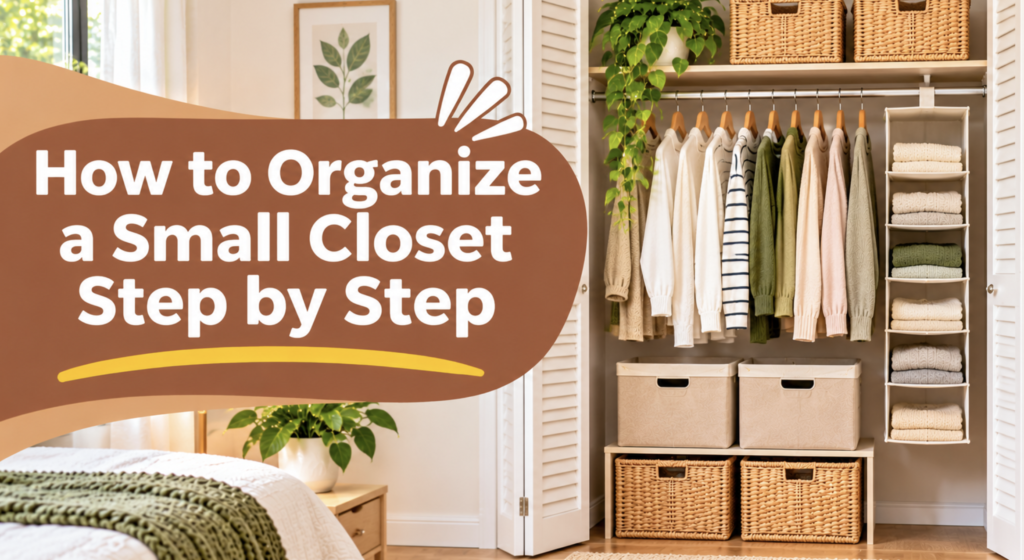
Opening your closet shouldn't feel like a guessing game. Yet when clothes are squeezed together, shoes are piled on the floor, and accessories disappear behind everything else, finding a simple outfit can take longer than it should.
A small closet doesn't necessarily need a complete makeover. Often, a better arrangement makes more difference than additional storage furniture.
The easiest way to organize a small closet is to empty it, sort your belongings, measure the available space, and give frequently used items accessible locations.
Here's a practical step-by-step approach you can follow without spending a fortune on organizers.
Step 1: Empty Your Closet Completely
Start by removing clothes, shoes, bags, and accessories from the closet.
Place everything on a clean bed or another suitable surface where you can see what you own.
Taking everything out may seem inconvenient, but it helps you identify forgotten belongings and understand how much space each category requires.
While the closet is empty, wipe down shelves, clean the floor, and check for signs of moisture or damage.
Make sure surfaces are dry before returning your belongings.
If emptying everything at once isn't practical, work through one section at a time.
Step 2: Sort Your Clothes Into Categories
Before putting anything back, separate your belongings into manageable groups.
Useful categories include:
- Everyday shirts and tops.
- Pants and jeans.
- Dresses and jackets.
- Sweaters and folded clothing.
- Shoes and accessories.
- Seasonal clothing.
Next, identify items you no longer wear or need.
Consider donating usable clothing that no longer suits your needs, recycling textiles where appropriate, or removing damaged belongings.
There's no need to discard something simply because you haven't worn it recently. Special-occasion clothing and seasonal items may still be worth keeping.
The goal is to make thoughtful decisions rather than follow an arbitrary rule.
Step 3: Measure Your Available Closet Space
Before buying baskets or hanging organizers, take a few measurements.
Record the closet's width, depth, and usable height.
Check the space between shelves and the clearance beneath hanging clothes.
Don't forget door hinges, sliding-door tracks, or other features that affect accessibility.
For example, a large storage box might fit on a shelf but become difficult to remove through a narrow closet opening.
Measuring first prevents wasted purchases and helps you choose organizers that actually fit.
Step 4: Arrange Hanging Clothes by Type
A crowded clothing rod becomes easier to manage when similar garments are grouped together.
Place jackets with jackets, shirts with shirts, and dresses with dresses.
You can organize each category by color if you find that helpful, but it's not essential.
Keep the clothing you wear most frequently in the easiest-to-reach section.
Avoid squeezing hangers so tightly that removing one garment pulls several others along with it.
If your closet has limited hanging space, consider folding garments that don't need hangers, including many casual shirts and sweaters.
Step 5: Make Better Use of Closet Shelves
Closet shelves are often underused or crowded with unrelated belongings.
Assign a specific purpose to each available shelf.
For example:
| Closet Location | Recommended Storage |
|---|---|
| Upper shelf | Lightweight seasonal accessories |
| Middle shelf | Frequently used folded clothing |
| Lower shelf | Everyday bags or suitable containers |
| Closet floor | Shoes in an accessible arrangement |
Keep heavy objects on lower, stable surfaces.
Avoid stacking belongings so high that removing one item causes everything else to fall.
For more ways to maximize limited storage, explore our guide to small apartment storage ideas.
Step 6: Organize Shoes Without Crowding the Floor
Shoes can occupy valuable closet space when they're scattered or stacked awkwardly.
Start by separating everyday footwear from occasional-use pairs.
Keep frequently worn shoes near the front of the closet.
A low shoe rack may help if there's sufficient room, but don't buy one without checking its dimensions.
You can also use existing shelves for clean, lightweight footwear.
Avoid storing damp shoes inside enclosed containers. Allow them to dry first.
If you have very little closet space, consider keeping some footwear in another suitable storage area.
Step 7: Give Accessories Their Own Storage
Belts, scarves, hats, and handbags can quickly create clutter when mixed with clothing.
Choose one location for each type of accessory.
Small containers can hold belts and scarves, while an accessible shelf may accommodate frequently used bags.
Hooks or hanging organizers can be useful when properly installed and suitable for the intended weight.
Keep delicate items away from sharp edges or overcrowded compartments.
The simpler your arrangement, the easier it will be to maintain.
Step 8: Move Seasonal Items Out of Prime Storage
There's little benefit in keeping bulky winter clothing at the front of your closet during warm weather.
Store clean, completely dry seasonal garments in appropriate containers.
Suitable locations might include upper closet shelves, existing dresser compartments, or under-bed storage.
Avoid areas with moisture problems or extreme conditions that could damage fabrics.
If your apartment doesn't have enough built-in storage, see our guide on organizing a small apartment with no closets for alternative solutions.
Keep everyday essentials accessible regardless of the season.
Step 9: Avoid Overloading Closet Organizers
Extra shelves, hanging compartments, and storage boxes can be helpful, but adding too many may make a closet harder to use.
Before purchasing an organizer, identify the exact belongings it will hold.
Check its dimensions and weight capacity.
Make sure drawers, closet doors, and hanging clothes can still move freely.
An organizer that requires you to remove several other objects every time you need something isn't solving the problem.
Sometimes leaving a little empty space is the better choice.
Step 10: Keep Your Closet Organized With a Simple Routine
An organized closet is easier to maintain when everything has a consistent location.
Return clean clothing to its designated section rather than leaving it on a chair.
Keep worn clothes in an appropriate laundry hamper instead of mixing them with clean garments.
Once a week, spend a few minutes straightening shelves and returning misplaced accessories.
If one area repeatedly becomes messy, reconsider its arrangement.
For example, if folded shirts constantly fall over, shorter stacks or a different drawer arrangement may work better.
Final Thoughts
Learning how to organize a small closet doesn't require expensive renovations or complicated storage systems.
Start by reviewing what you own, measuring your space, and arranging belongings according to how frequently you use them.
Keep everyday essentials accessible, avoid overcrowding shelves, and choose organizers only when they solve a specific problem.
A practical closet isn't necessarily one that looks perfect in photographs. It's one that helps you find your belongings without turning every morning into a search.
-
Pingback: Small Bedroom Storage Ideas Without Extra Furniture - The Organized Nook
Leave a Reply