
How to Organize a Shared Bedroom With Limited Space
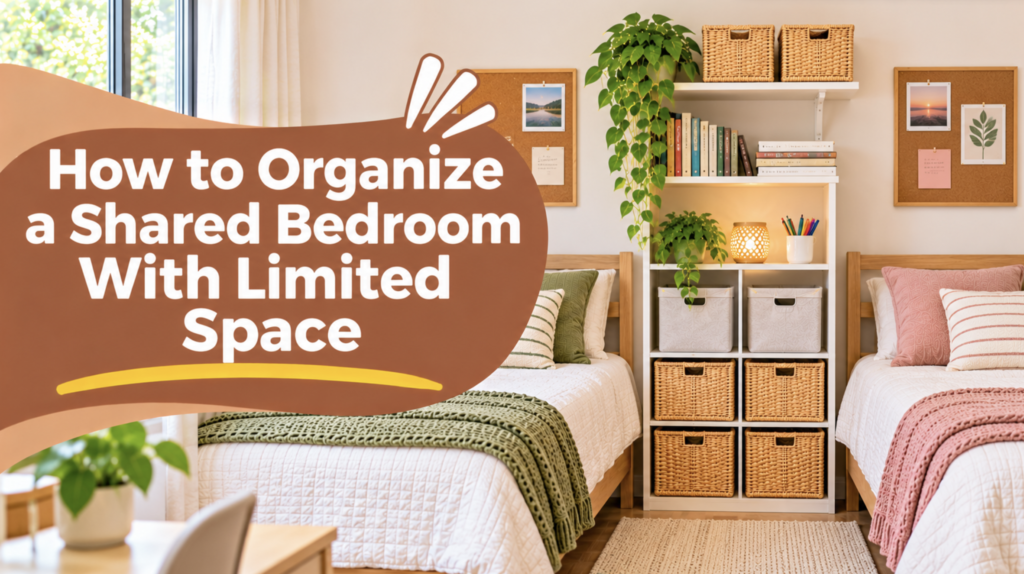
Sharing a small bedroom can be challenging when two people need space for clothes, personal belongings, and everyday activities. One person's shoes end up beside the other's bed, drawers become overcrowded, and finding a quiet corner can feel impossible.
The good news is that sharing a bedroom doesn't have to mean giving up organization or personal space.
The best way to organize a shared bedroom is to divide storage fairly, give each person clearly defined areas, and arrange furniture around everyone's daily routines.
Whether you're sharing with a sibling, roommate, or partner, these practical ideas can help make a limited space more comfortable.
1. Start by Discussing Everyone's Storage Needs
Before moving furniture, talk about what each person needs to keep in the bedroom.
One person may have more hanging clothes, while the other needs space for books, school supplies, or work equipment.
Make a simple list of the belongings that require storage.
Discuss which items can be shared and which should remain separate.
For example, sharing a bookshelf may work well, but personal clothing and private documents generally need their own designated spaces.
A fair arrangement doesn't always mean splitting every shelf exactly in half. It means finding a system that works for both people.
2. Give Each Person a Personal Storage Zone
When belongings are mixed together, everyday tasks become unnecessarily frustrating.
Assign individual drawers, shelves, or containers to each person.
If you're using one dresser, consider dividing its drawers based on storage needs.
In a shared closet, separate hanging clothes into clearly defined sections.
Simple labels can help identify storage areas, especially when siblings share a room.
If closet space is particularly limited, our guide on how to organize a small closet offers practical ways to improve its arrangement.
3. Arrange Beds to Preserve Walking Space
Bed placement has a major effect on how comfortably people can move around a shared bedroom.
Consider the room's shape, door location, windows, and available floor space.
In some rooms, placing beds along opposite walls provides a useful central walkway.
In others, positioning beds along the same wall may leave more space for shared furniture.
Before rearranging anything, measure the beds and check whether doors, drawers, and windows remain accessible.
Never block exits or ventilation openings.
The best layout depends on the actual room, not a decorating trend.
4. Use a Shared Nightstand When Practical
Two separate nightstands aren't always necessary.
If beds are positioned close together, a suitable shared table may provide enough room for everyday essentials.
Give each person a designated section or drawer.
Keep frequently used items such as glasses, books, or alarm clocks accessible.
Avoid overcrowding the surface with decorations.
If sharing one table causes inconvenience, consider whether existing shelves or other stable furniture can serve as individual bedside storage.
A shared solution should make life easier for both people.
5. Divide Closet Space by Clothing Type
Shared closets often become crowded because different belongings compete for the same hanging and shelf space.
Start by identifying how much storage each person's clothing actually requires.
Someone with several dresses or jackets may need more hanging space, while another person may benefit from additional folded-clothing storage.
Arrange garments by category and keep frequently worn clothes accessible.
Don't force equal divisions when storage needs differ significantly.
For alternatives to traditional drawers, explore our guide on organizing clothes without a dresser.
6. Create Privacy Without Crowding the Room
Even when two people get along well, having some personal space matters.
Small visual boundaries can make a shared bedroom feel more comfortable.
For example, separate reading lamps or individual wall decorations can help distinguish personal areas.
An existing bookshelf may provide a visual division if it can be positioned safely without restricting movement.
Avoid tall, unstable furniture or heavy partitions that make the room difficult to navigate.
If privacy is important for changing clothes, discuss a practical arrangement that respects everyone's comfort.
7. Keep Personal Items Near Their Owners
Frequently used belongings should be stored close to where their owners need them.
For example, someone who reads before bed may benefit from keeping books near their sleeping area.
Another person might need easy access to headphones, notebooks, or personal accessories.
Avoid assigning storage locations simply because a container happens to be empty.
Think about how each person uses the room.
For additional ways to use available bedroom space, see our small bedroom storage ideas without extra furniture.
8. Make Shared Storage Easy to Understand
Some belongings, such as spare blankets or household supplies, may be shared.
Keep these items in clearly designated locations.
A suitable container can hold extra bedding, while an existing shelf may accommodate books or other shared essentials.
Agree on where items should be returned after use.
Avoid storing private belongings in shared containers without permission.
Simple agreements prevent confusion and reduce the likelihood of accidentally misplacing someone else's things.
9. Establish a Realistic Cleanup Routine
A shared bedroom becomes difficult to maintain when only one person is responsible for keeping it organized.
Discuss which tasks belong to each person and which should be shared.
For example, everyone can manage their own clothing and personal storage areas.
Shared responsibilities might include keeping the floor clear and returning common items to their places.
A short evening reset can help prevent clutter from accumulating.
Our guide on keeping a small bedroom organized every day includes a routine that can be adapted for shared spaces.
10. Review the Layout When Needs Change
An arrangement that works today may become less practical later.
Work schedules, school assignments, seasonal clothing, and changing storage needs can all affect how the room is used.
Check occasionally whether each person's belongings remain accessible.
If one area repeatedly becomes overcrowded, discuss possible adjustments before buying more furniture.
Sometimes swapping shelf assignments or rearranging existing containers is enough.
The goal is a comfortable system that can adapt without requiring a complete bedroom makeover.
Final Thoughts
Organizing a shared bedroom with limited space requires more than finding places to put belongings.
A practical arrangement should give everyone access to their essentials, respect personal boundaries, and preserve enough room for everyday activities.
Start by discussing storage needs, assigning individual areas, and arranging furniture thoughtfully.
With clear expectations and simple routines, even a compact shared bedroom can become easier to use and maintain.
Leave a Reply