
How to Organize Spices in a Small Kitchen: 9 Easy Ideas
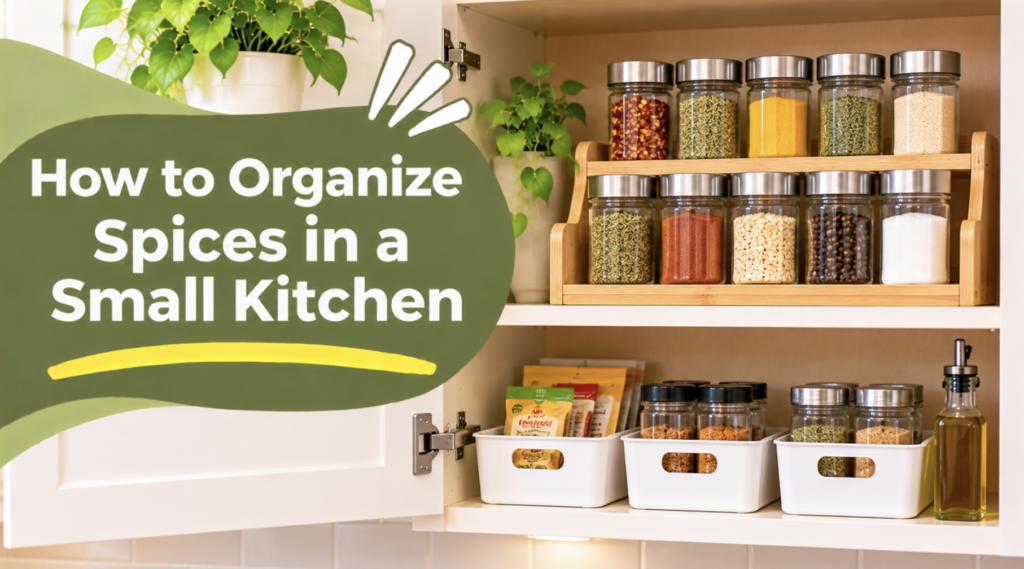
Spices add flavor to everyday meals, but storing them in a small kitchen can be challenging. Jars often get pushed to the back of cabinets, seasoning packets become mixed together, and finding the right ingredient can take longer than expected.
A practical spice organization system does not need a large pantry or expensive storage accessories. With a little sorting and a suitable storage location, you can make your seasonings easier to find while keeping your cabinets and countertops neat.
Here are nine simple ways to organize spices in a small kitchen.
1. Gather and Sort Your Spices
Start by collecting your spice jars, seasoning packets, and other seasonings in one place. This helps you see how much you have and identify items that are difficult to organize.
Group them into simple categories, such as:
- Ground spices
- Whole spices
- Dried herbs
- Seasoning blends
- Baking spices
- Frequently used seasonings
Check the labels and review the condition of each product. Remove items that are empty or no longer suitable for use, following the product label and local disposal guidance.
You may also discover duplicate seasonings. Keep the amount that makes sense for your cooking routine rather than allowing unnecessary extras to fill your limited storage space.
2. Choose a Convenient Storage Location
The best place for spices depends on your kitchen layout. Ideally, choose a cool, dry location away from direct sunlight, steam, and heat sources.
A cabinet near your food preparation area can be convenient, provided it is not directly above a stove or another appliance that produces heat. A drawer may also work if it is clean, dry, and easy to access.
Avoid storing spices next to the sink or in areas where moisture can collect. Excessive heat, light, and humidity can affect the quality of seasonings over time.
Choose one main storage location whenever possible. Keeping spices scattered across several cabinets makes them harder to find and manage.
3. Use a Small Spice Rack
A compact spice rack can make good use of limited cabinet space. Depending on the available dimensions, you can choose a narrow shelf, a tiered rack, or a small organizer designed for kitchen cabinets.
Tiered racks are particularly useful because they raise the jars in the back, making labels easier to see.
Before purchasing one, measure the cabinet's width, depth, and height. Check that the rack leaves enough room for the cabinet door to close and for jars to be removed comfortably.
You do not need a large organizer. A simple rack that holds your most frequently used spices may be enough.
4. Organize Spices in a Drawer
If your kitchen has an available drawer, it can be a practical place for spice storage.
A drawer organizer can keep jars from moving around whenever the drawer opens. Some organizers hold containers at an angle, allowing you to read their labels from above.
Arrange spices in groups or alphabetically, depending on what makes them easiest for you to find. Keep taller containers from blocking smaller ones, and avoid overcrowding the drawer.
Make sure the drawer is dry and that containers have secure lids before storing them there.
5. Use Clear Labels
Clear labels make it easier to identify spices, especially when several seasonings have similar colors or are stored in matching containers.
If you use refillable jars, label each one with the correct spice name. You can also include the date you filled the container if that helps you manage your supplies.
Keep original packaging and product information when needed, particularly for seasoning blends that may contain allergens or other ingredients you want to identify.
Never rely only on appearance to identify a seasoning. Clear labeling helps prevent confusion when cooking.
6. Group Frequently Used Spices Together
Not every spice needs to be equally accessible. Think about the seasonings you reach for most often and place them together in the easiest-to-reach section.
For example, everyday cooking spices might include garlic powder, black pepper, paprika, and dried oregano. Baking spices can be grouped separately if you use them less frequently.
This arrangement reduces the time spent searching through several jars while preparing meals.
You can also keep occasional-use seasonings on a higher shelf, as long as they remain safely accessible.
7. Keep Spice Packets Organized
Not all seasonings come in jars. Small packets of taco seasoning, soup mixes, and other blends can quickly become messy when stored loose in a cabinet.
Use a small basket, divided container, or suitable box to keep packets together. Arrange them vertically when possible so the labels are easier to see.
Separate unopened packets from opened ones, and follow the package instructions for storage after opening. Keep them dry and away from heat.
A dedicated packet organizer can also prevent small packages from getting lost behind larger food containers.
8. Avoid Transferring Every Spice Into Matching Jars
Matching spice jars can create a uniform appearance, but transferring every seasoning is not always necessary.
Original packaging often includes useful information such as ingredients, allergen details, storage instructions, and manufacturer information. Keeping spices in their original containers can make this information easier to access.
If you prefer refillable jars, choose clean, dry containers that are appropriate for food storage. Label them clearly and retain the original packaging information when it is important.
Only transfer spices when the new container is suitable and the process makes storage more practical.
9. Maintain Your Spice Organization
Once your spices have a designated place, a simple routine can help keep everything organized.
After cooking, return each jar or packet to its assigned location. Avoid leaving seasonings on the counter, especially near heat or moisture.
Periodically review your collection and check product labels for freshness guidance. Buy only the quantities you are likely to use, so older seasonings do not accumulate unnecessarily.
If your spice collection grows, reassess the available space before adding another organizer. Sometimes removing duplicates or combining categories is all that is needed.
Final Thoughts
Organizing spices in a small kitchen is easier when every seasoning has a clear place. A compact rack, a divided drawer, simple labels, and a convenient storage location can make everyday cooking more efficient.
Start by sorting what you already own, then choose a system that fits your cabinets and cooking habits. You do not need a large collection of matching jars or expensive accessories to create a neat and practical spice storage area.
Leave a Reply