
How to Organize Food in Your Freezer: 9 Practical Ideas
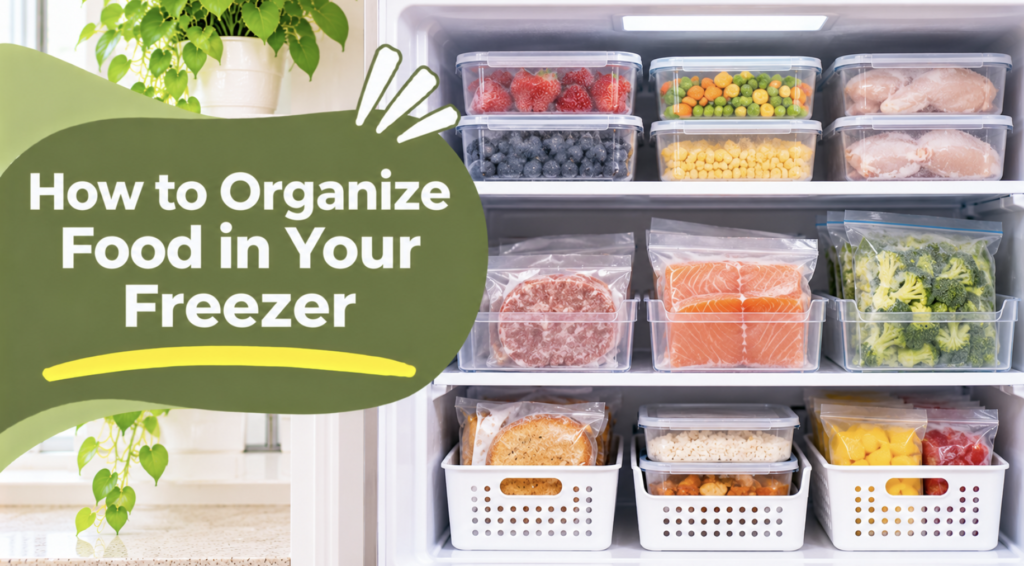
A crowded freezer can make it difficult to find ingredients, keep track of leftovers, and use food before its quality declines. Bags get pushed behind containers, frozen vegetables become difficult to identify, and older items can remain forgotten at the bottom of a drawer.
Organizing your freezer does not require expensive storage systems or a large collection of matching containers. A few simple categories, clear labels, and suitable storage bins can help you make better use of the available space.
Whether you have a refrigerator freezer or a separate freezer, these practical ideas can help you create a more organized system.
1. Empty and Sort Your Freezer
Start by reviewing the food currently stored in your freezer. If possible, organize one shelf or drawer at a time so frozen items are not left out unnecessarily.
Group similar foods together, such as:
- Frozen fruits
- Vegetables
- Meat and poultry
- Fish and seafood
- Bread and baked goods
- Prepared meals and leftovers
Check packages for labels, dates, and signs of damage. Remove items that should no longer be used according to food safety guidance.
This process also helps you identify duplicate products and ingredients you may have forgotten about.
Keep the freezer closed as much as possible while organizing, and return frozen food promptly to maintain safe storage conditions.
2. Create Separate Storage Zones
Once everything is sorted, assign a specific area to each food category.
For example, one section can hold frozen vegetables, another can contain meat and poultry, and a separate area can be reserved for bread or prepared meals.
The exact arrangement depends on your freezer's design. Use its shelves and drawers in a way that keeps food accessible without blocking vents or preventing the door from closing properly.
Try to keep frequently used ingredients in convenient locations. Foods you use less often can go in less accessible sections, provided you can still identify and retrieve them safely.
Clear categories make it easier to see what you have before preparing meals or shopping for groceries.
3. Use Freezer-Safe Containers and Bags
Appropriate packaging helps protect frozen food and makes storage easier.
Choose containers, bags, or wrapping specifically designed for freezer use. Ordinary food containers may not be suitable for freezing, so check the manufacturer's instructions before using them.
Whenever practical, remove excess air from freezer bags without compromising the packaging. Use containers that close securely and are appropriate for the type of food being stored.
Avoid filling rigid containers completely when the food may expand during freezing. Follow the container manufacturer's recommendations for safe filling and storage.
Organized packaging can also help you stack similar items without creating unstable piles.
4. Label Everything Clearly
Labels are especially useful when frozen food looks different from its original fresh or prepared form.
Write the food name and the date it was placed in the freezer. You can also include portion information when storing prepared meals or ingredients for specific recipes.
Use labels that remain readable in freezer conditions. Place them where they can be seen without removing every package.
For example, a label might identify a container as vegetable soup, cooked rice, or chopped fruit.
Clear labels reduce guesswork and make it easier to rotate food instead of repeatedly opening packages to identify their contents.
5. Store Food in Convenient Portions
Freezing food in smaller portions can make meal preparation more practical.
Instead of freezing one large container of soup, consider dividing it into portions suitable for future meals. You can also separate ingredients into quantities that match your usual recipes.
Use packaging that is appropriate for freezing and label each portion clearly.
Avoid freezing more food than you are likely to use. A freezer organization system works best when it reflects your household's actual cooking habits.
Remember to follow safe cooling and freezing practices for cooked foods rather than leaving them at room temperature for extended periods.
6. Arrange Items So Older Food Is Easy to Find
Food rotation helps prevent forgotten packages from accumulating in the back of the freezer.
When adding new items, place older suitable packages where they are easier to notice and access. This creates a simple first-in, first-out system.
The date on each label helps you identify which items have been stored longer. Follow recommended freezer storage guidance for each food because quality and storage recommendations vary.
Do not assume that frozen food remains suitable indefinitely simply because it has stayed frozen. Check reliable food safety recommendations and discard food when necessary.
7. Use Baskets to Group Smaller Items
Small packages can become difficult to manage when they are scattered across shelves.
Freezer-safe bins or suitable baskets can help group similar products together. For example, you might use separate containers for frozen vegetables, fruit, and individually packaged meals.
Choose organizers that fit your freezer dimensions and allow cold air to circulate. Avoid filling every available space with bins, especially if they block air vents or make food difficult to retrieve.
Transparent containers are particularly helpful because they let you see their contents without opening every basket.
8. Keep a Simple Freezer Inventory
A basic freezer inventory can help you remember what is available and reduce unnecessary grocery purchases.
You do not need a complicated spreadsheet. A small list on paper or a note on your phone can be enough.
Organize the list by category and update it when you add or remove food.
For example:
- Vegetables: peas, broccoli, mixed vegetables
- Fruit: strawberries, blueberries
- Prepared meals: soup, cooked rice
- Bread: sliced bread, rolls
You can also note storage dates for items you want to use soon.
Review the list before shopping or planning meals. This simple habit makes it easier to use ingredients you already have.
9. Maintain the Freezer With a Regular Check
A freezer can become cluttered again if food is added without returning it to its designated area.
Once a week or before grocery shopping, take a few minutes to review the contents.
Check labels, organize loose packages, and make room for new items. Remove unnecessary packaging when appropriate, while keeping important food information available.
Make sure the appliance maintains the recommended freezer temperature. A commonly recommended target is 0°F (-18°C), but you should also follow your freezer manufacturer's instructions.
If you notice that the freezer is consistently overcrowded, review your storage categories and shopping habits before purchasing additional organizers.
Final Thoughts
Organizing food in your freezer is easier when every category has a designated place. Suitable containers, clear labels, portioned ingredients, and a simple rotation system can help you make better use of limited freezer space.
Start by sorting the food you already have and creating a few practical storage zones. Then maintain the system with regular checks and clear labels.
A well-organized freezer makes it easier to find ingredients, plan meals, and keep track of the food you have available.
Leave a Reply