
How to Organize Your Refrigerator for a Cleaner, More Functional Kitchen
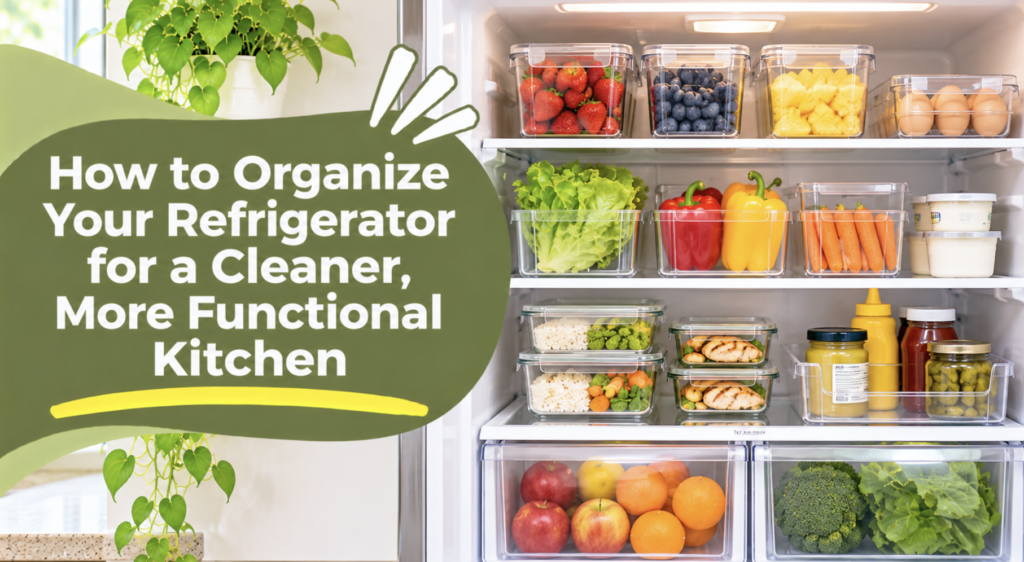
A crowded refrigerator can make everyday meal preparation more difficult. Fresh produce gets pushed behind containers, leftovers become hard to find, and condiment bottles take up valuable shelf space. When everything is mixed together, it can also become harder to keep track of the food you already have.
Organizing your refrigerator does not require expensive accessories or a complete collection of matching containers. A few practical storage zones, suitable bins, and regular maintenance can make the space easier to use.
Here are nine simple ways to organize your refrigerator and create a more functional kitchen.
1. Empty and Clean One Section at a Time
Before rearranging your refrigerator, review what is inside. You can work one shelf or drawer at a time instead of removing everything at once.
Check food labels, storage instructions, and dates. Discard food that is spoiled or should no longer be used, following food safety guidance. Wipe shelves and drawers with products suitable for refrigerator surfaces, then allow the area to dry before returning food.
This is also a good opportunity to identify duplicate products and ingredients you have forgotten about.
Avoid leaving perishable food at room temperature longer than recommended while organizing. Work efficiently and return items to refrigeration promptly.
2. Create Zones for Different Food Categories
Grouping similar foods together makes the refrigerator easier to navigate. Instead of placing items wherever there is an empty spot, create simple categories.
For example, you can organize sections for:
- Dairy products and refrigerated alternatives
- Ready-to-eat foods
- Leftovers
- Fruits and vegetables
- Condiments and sauces
- Ingredients for upcoming meals
Follow your refrigerator manufacturer's layout and food safety recommendations when deciding where each category belongs. Some refrigerators have specific drawers designed to control humidity or temperature.
The goal is to make it easy to see what you have without moving several containers every time you need an ingredient.
3. Use Clear Storage Bins
Clear refrigerator bins can help group small products and prevent them from spreading across the shelves.
You might use one bin for yogurt and similar products, another for packaged snacks, and a separate container for items you plan to use soon.
Choose bins that fit your refrigerator's dimensions and leave enough room for air to circulate. Do not overcrowd shelves or block refrigerator vents.
Clear containers are useful because their contents remain visible. If you prefer opaque bins, add simple labels so everyone knows where items belong.
Remember that storage bins should be cleaned regularly and should not replace appropriate food packaging or refrigeration requirements.
4. Arrange Leftovers So They Are Easy to Find
Leftovers can easily disappear behind larger containers. Give them a designated area where they remain visible and easy to access.
Use clean, food-safe containers with secure lids. Label them with the contents and the date they were stored so you can keep track of what needs to be used first.
Place older leftovers where they are easy to notice, while keeping food within the storage time recommended by reliable food safety guidance.
Avoid assuming that food is safe simply because it looks or smells normal. Follow recommended storage times and discard anything that should no longer be eaten.
5. Keep Fruits and Vegetables Organized
Produce drawers can become crowded when different fruits and vegetables are stored together without a system.
Start by checking the storage instructions for each type of produce. Some fruits and vegetables are best refrigerated, while others should be stored elsewhere. Certain items may also require separation because they can affect the ripening of nearby produce.
Use the refrigerator's designated drawers as intended and avoid packing them too tightly.
If you use clear containers or produce bins, make sure they are clean, suitable for food storage, and allow the contents to remain in appropriate conditions.
Organizing produce by category can also help you notice what needs to be used before your next grocery trip.
6. Make Condiments Easier to Access
Sauces, dressings, jars, and condiment bottles can occupy a surprising amount of refrigerator space.
Group similar products together in one designated section. For example, you might keep salad dressings together and arrange sauces in another area.
Place taller bottles where they fit securely without blocking other items. Smaller jars can be grouped in a shallow bin to keep them from getting scattered.
Check the manufacturer's storage instructions, especially after opening. Not every product has the same refrigeration requirements.
Remove empty containers and review products regularly so unnecessary items do not take over the shelf.
7. Label Containers and Use Food Rotation
Labels can make a refrigerator organization system much easier to maintain.
For leftovers and prepared ingredients, write the contents and storage date on a removable label. This helps everyone identify what is inside and when it was stored.
A simple first-in, first-out approach can also help. When adding a new product, move older suitable items toward the front so they are easier to notice.
This does not replace checking storage times or food safety recommendations. It simply makes it easier to use food in an organized way.
8. Avoid Overfilling the Refrigerator
It can be tempting to use every available shelf and corner, but overcrowding makes it harder for cool air to circulate.
Leave appropriate space between products and avoid blocking vents. Store food in a way that allows you to see and reach items without moving several containers.
A refrigerator thermometer can help you check that the appliance is maintaining a safe temperature. Follow food safety recommendations and the manufacturer's guidance for the correct settings.
If the refrigerator is consistently too full, review your shopping habits and remove unnecessary duplicates before adding more storage accessories.
9. Maintain the Organization With a Weekly Check
A simple weekly review can prevent refrigerator clutter from building up again.
Before grocery shopping, check the shelves and drawers. Make a note of ingredients you already have and identify items that should be used soon.
After unpacking groceries, return products to their designated zones. Clean up small spills promptly and make sure containers are closed properly.
You can also use a short weekly checklist:
- Review leftovers and storage dates
- Check produce drawers
- Remove empty packaging
- Return misplaced items
- Wipe visible spills
- Make room for new groceries
These small habits help keep the refrigerator functional without requiring a complete reorganization every week.
Final Thoughts
Organizing your refrigerator is about more than making shelves look neat. Clear categories, suitable storage bins, visible leftovers, and regular food checks can make everyday kitchen routines easier.
Start with one shelf or drawer and create storage zones that match the way your household uses food. Keep food safety instructions in mind, avoid overcrowding, and maintain the system with a quick weekly review.
With a practical arrangement, your refrigerator can become easier to use and help you keep track of the ingredients you already have.
Leave a Reply