
How to Organize Food Storage Containers and Lids
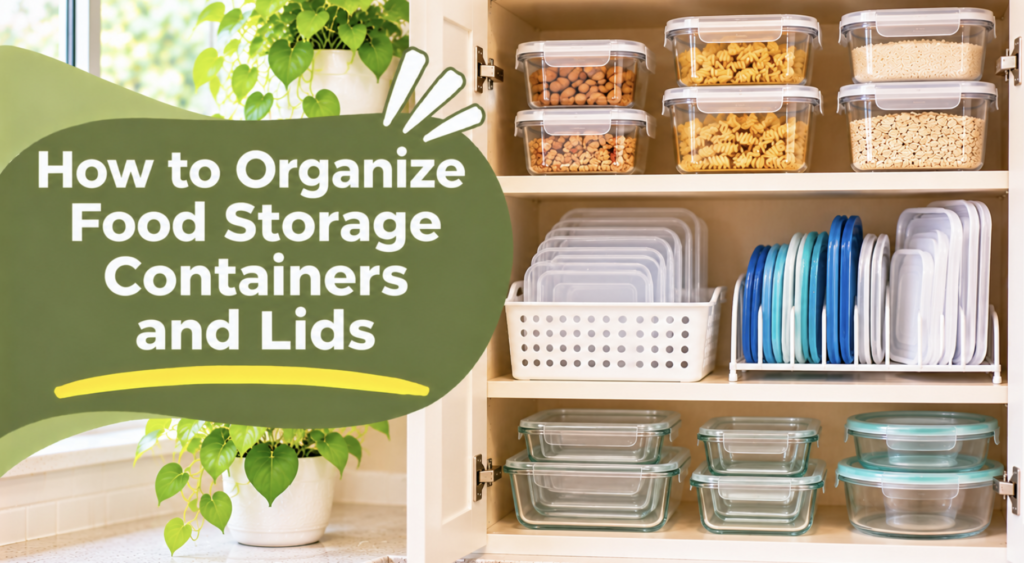
Food storage containers are useful in almost every kitchen, but they can quickly become a source of clutter. Mismatched lids, containers in different sizes, and overflowing cabinets make it difficult to find what you need when storing leftovers or preparing meals.
The solution is not necessarily buying a new container set. A better approach is to sort what you already own, group matching pieces, and create a storage system that fits your available cabinet or drawer space.
These practical ideas can help you organize food storage containers and lids so they are easier to find, use, and put away.
1. Take Everything Out and Sort It
Start by removing all food storage containers and lids from the cabinet or drawer where you keep them. Place everything on a clean surface so you can see how much you have.
Separate the pieces into a few groups:
- Small containers
- Medium containers
- Large containers
- Glass containers
- Plastic containers
- Lids and accessories
Check each container for its matching lid. Set aside pieces that are cracked, damaged, badly stained, or missing essential parts.
Avoid keeping containers that you rarely use simply because they might be useful someday. A smaller collection of functional pieces is usually easier to organize than a crowded cabinet full of duplicates.
2. Match Every Container With Its Lid
One of the most frustrating parts of storing food containers is searching for the correct lid. Before arranging anything, match each container with a lid that fits properly.
Place the lid on its container to check the fit. Do not assume that lids from similar-looking containers are interchangeable.
Once you have matched the pieces, decide how you want to store them. You can keep lids attached to containers when they stack neatly, or store the lids separately in a divider.
If a container has no matching lid and you do not use it for another suitable purpose, consider removing it from your storage collection.
3. Nest Containers by Size
Nesting is one of the simplest ways to save cabinet space. Place smaller containers inside larger containers of the same general shape and stack them together.
For example, you might create separate groups for:
- Small rectangular containers
- Medium rectangular containers
- Large rectangular containers
- Round containers
- Glass containers
Keep containers from different sets separate when their shapes do not fit together efficiently. Forcing unrelated pieces into one stack can make them difficult to remove.
If possible, leave enough room around each group so you can take out one container without pulling out the entire stack.
4. Store Lids Vertically
Loose lids often slide around and become mixed together at the bottom of a cabinet. Storing them vertically can make them easier to see and access.
A small file organizer, adjustable divider, or suitable kitchen rack may work as a lid holder. Choose an option that fits the cabinet and keeps the lids upright without allowing them to fall over.
Group lids by shape or container set. If you have several sizes, arrange them from smallest to largest.
You can also use an existing small basket to hold lids together, provided they remain easy to identify and remove.
5. Use a Basket or Bin to Keep Sets Together
A simple basket can help prevent containers from spreading across an entire shelf. Place one group of containers inside a suitable bin and keep the matching lids nearby.
For example, a basket might hold lunch-size containers, while another holds larger pieces used for meal preparation.
Choose baskets that fit the depth and height of your cabinet. They should be sturdy enough for their contents and easy to pull out without tipping.
Avoid stacking heavy glass containers in unstable arrangements. Keep heavier pieces on lower, secure shelves whenever possible.
6. Choose the Right Storage Location
The best place for food storage containers depends on how your kitchen is arranged and how often you use them.
If you regularly pack lunches, keep everyday containers in an accessible cabinet near your food preparation area. If you mostly use them for leftovers, choose a cabinet that is convenient after cooking and cleaning.
Try to avoid placing frequently used containers on very high shelves or behind large appliances.
You can also use a kitchen drawer if it has enough depth and height. Store lids in a divider and stack containers in groups that fit the drawer.
For more ideas about making better use of kitchen storage, read our guide on how to organize deep kitchen cabinets without wasting space.
7. Keep Food Storage Separate From Other Kitchen Items
Containers and lids are easier to manage when they have a dedicated storage area. Avoid mixing them with cooking utensils, cleaning supplies, or unrelated kitchen accessories.
A specific shelf or drawer section makes it easier to return each piece to its place. It also helps prevent small lids from getting lost behind larger items.
If your kitchen has limited cabinet space, consider using one section of a cabinet for containers and another for baking dishes or cookware. The important thing is to create clear categories that make sense for your daily routine.
You can find additional storage ideas in our article about organizing kitchen cabinets for everyday use.
8. Make Food Safety Part of Your Storage Routine
Organizing containers is also a good opportunity to check their condition and intended use.
Follow the manufacturer's instructions for cleaning, heating, freezing, and storing each container. Not every container is suitable for a microwave, dishwasher, or freezer.
Keep food containers clean and completely dry before putting them away. Store them in a clean cabinet away from household cleaning products and other non-food items.
If a container is damaged or no longer seals properly, check the manufacturer's recommendations and replace it when necessary. Do not rely on a damaged container to store food securely.
9. Maintain the System With a Quick Weekly Check
Even a well-organized cabinet can become cluttered if containers are put away without matching their lids or returning them to their groups.
After washing and drying your containers, return them to their designated sections. Nest similar sizes together and place lids in their assigned divider or basket.
Every few weeks, review the collection and remove pieces that are no longer useful. This prevents unnecessary duplicates from taking over your storage space.
A simple routine is usually more effective than reorganizing the entire cabinet every time it becomes crowded.
Final Thoughts
Organizing food storage containers and lids does not require an expensive cabinet makeover. Sorting matching pieces, nesting containers by size, storing lids vertically, and choosing a dedicated storage area can make a noticeable difference.
Start with the containers you already own and build a system around the way you use your kitchen. With a little consistency, your storage cabinet can stay neat, accessible, and easier to maintain.
Leave a Reply