
How to Organize Baking Supplies in a Small Kitchen
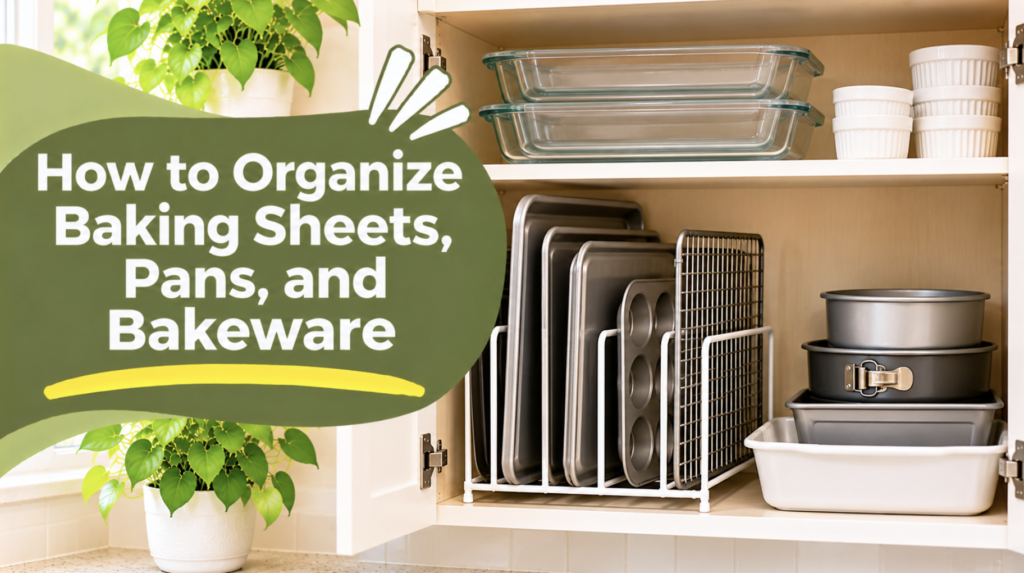
Baking sheets, muffin pans, cake pans, and glass baking dishes can take up a surprising amount of space in a small kitchen. When these items are stacked without a system, finding the right pan becomes frustrating, and putting everything away can feel like a chore.
The solution is to group similar bakeware, use vertical storage when possible, and make the most of existing cabinet space. You do not need a large pantry or an expensive kitchen renovation to create a practical storage system.
Here are nine ways to organize baking sheets, pans, and bakeware in a small kitchen.
1. Sort Your Bakeware by Type
Before choosing an organizing method, take everything out of the cabinet or drawer where you store baking supplies. Seeing the entire collection helps you understand how much space you need.
Separate items into categories such as:
- Baking sheets and cookie sheets
- Muffin and cupcake pans
- Cake and loaf pans
- Glass baking dishes
- Cooling racks
- Pie plates and specialty bakeware
Check each piece for damage, excessive wear, or parts that are no longer useful. Set aside items you no longer use so they do not take up valuable cabinet space.
You may also find duplicate pans that serve the same purpose. Keeping the pieces you actually use makes the remaining collection easier to organize.
2. Store Baking Sheets Vertically
Baking sheets are often difficult to stack because removing one from the bottom requires moving several others.
Vertical storage can solve this problem. A sturdy file-style rack or bakeware organizer can hold baking sheets upright, allowing you to remove one at a time.
Place the organizer inside a cabinet with enough height and depth. Arrange the sheets by size or frequency of use so the ones you reach for most often are easy to access.
Make sure the rack is stable and suitable for the weight of the items. Avoid arrangements where heavy sheets could slide or fall when the cabinet door opens.
3. Group Pans by Size and Shape
Cake pans, muffin tins, and loaf pans are easier to store when similar pieces are grouped together.
Create separate stacks for pans with compatible shapes and sizes. For example, round cake pans can be stored together, while rectangular pans can have their own section.
Avoid stacking too many pieces if the pile becomes unstable or difficult to access. If some pans have delicate nonstick surfaces, follow the manufacturer's care instructions and use appropriate protection between them to reduce scratching.
The goal is to make each group easy to identify and remove without disturbing the rest of the cabinet.
4. Use Cabinet Dividers or Organizers
A simple divider can transform a crowded cabinet into a more functional storage area.
Look for adjustable cabinet organizers, vertical dividers, or racks designed for baking sheets and cutting boards. Choose one based on your cabinet measurements rather than appearance alone.
Before purchasing an organizer, measure:
- Cabinet width
- Available depth
- Interior height
- Space needed for the cabinet door and hinges
A properly sized organizer can separate different types of bakeware and prevent items from leaning against one another.
If you prefer a lower-cost solution, consider whether an existing sturdy organizer can serve the same purpose.
5. Make Use of Deep Cabinets
Deep cabinets can hold larger baking dishes, but items often disappear toward the back.
Place frequently used bakeware near the front and reserve the back for occasional-use pieces. If the cabinet is wide enough, use a suitable pull-out shelf or basket to make stored items easier to reach.
Keep heavier glass baking dishes on lower, stable shelves. Avoid placing heavy items high above your head, where retrieving them could be difficult.
For more ways to improve cabinet storage, read our guide on how to organize deep kitchen cabinets without wasting space.
6. Store Glass Baking Dishes Carefully
Glass baking dishes can be bulky, so they need a storage arrangement that keeps them accessible and protected.
Group dishes by size and shape. If they are designed to nest or stack, follow the manufacturer's recommendations for doing so.
Avoid creating tall, unstable piles. Store heavier dishes on lower shelves and make sure each piece can be lifted without forcing other items out of the cabinet.
If the manufacturer recommends protective separators, use suitable ones between stacked dishes. Always check the condition of glass bakeware before use and follow its instructions for temperature changes and handling.
7. Keep Baking Accessories Together
Baking often involves more than pans. Cooling racks, measuring tools, pastry brushes, and specialty accessories can become scattered throughout the kitchen.
Create a dedicated section for smaller baking accessories. A small bin or drawer organizer can keep related items together.
For example, you might store measuring cups and spoons in one drawer section and cooling racks near your baking sheets.
Avoid mixing small accessories with heavy pans if they are likely to become difficult to find or could be damaged.
You can also use a separate shelf for baking equipment that you use only occasionally.
8. Choose Storage Based on How Often You Bake
Your storage arrangement should reflect your actual cooking habits.
If you bake regularly, keep your most-used baking sheets, muffin pans, and cake pans in an accessible cabinet near your preparation area.
If you bake only occasionally, you can store specialty pans in a less accessible location, provided they remain safe to retrieve.
There is no need to give every item the same amount of space. Prioritize the equipment that supports your everyday routine.
For additional ideas about making limited kitchen storage more practical, explore how to organize a small kitchen on a budget.
9. Maintain the Cabinet After Every Use
An organized cabinet can become crowded again when bakeware is returned without a consistent system.
After washing and completely drying each item, return it to its assigned category. Place baking sheets in their vertical organizer, stack compatible pans, and keep accessories in their designated containers.
Every few weeks, review the cabinet and remove items you no longer need. This is also a good opportunity to check for damaged pieces and make sure the storage arrangement remains stable.
A few minutes of regular maintenance can prevent another complete cabinet reorganization.
Final Thoughts
Organizing baking sheets, pans, and bakeware in a small kitchen is easier when every category has a designated place. Vertical dividers, stable stacks, suitable cabinet organizers, and thoughtful placement can help you make better use of limited storage.
Start by sorting your collection and identifying the pieces you use most often. Then build a system around your cabinet dimensions and baking habits. With a practical arrangement, your bakeware can stay accessible without taking over the entire kitchen.
Leave a Reply