
How to Organize Pots and Pans in Small Kitchen Cabinets
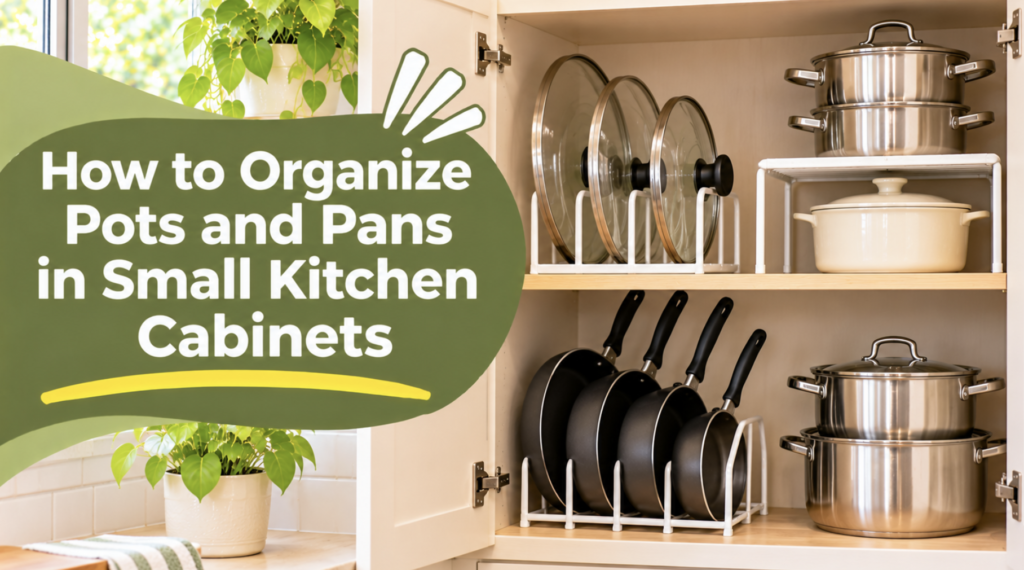
Pots and pans are some of the most difficult kitchen items to organize. They're bulky, come in different shapes and sizes, and often have handles that make stacking awkward.
In a small kitchen, a crowded cookware cabinet can become especially frustrating. You might have to remove three pans just to reach the one you use every day, while pot lids seem to disappear whenever you need them.
The solution is to create a storage arrangement that keeps cookware accessible without wasting valuable cabinet space.
The best way to organize pots and pans in small kitchen cabinets is to group cookware by size, separate lids, and use vertical storage when appropriate.
Here are practical ways to make your cookware easier to store and retrieve.
1. Empty the Cabinet and Sort Your Cookware
Start by removing all pots, pans, lids, and other cookware from the cabinet.
Place everything on a clean countertop or another suitable surface.
Group similar items together:
- Frying pans and skillets.
- Sauce pans.
- Stockpots and larger cooking pots.
- Baking dishes.
- Lids and removable accessories.
Check each item for damage and consider whether you actually use it.
If you own several pans that perform the same function, you may not need all of them.
Keep cookware that suits your cooking habits and move occasional-use items to less accessible storage.
Before returning anything, clean the cabinet and allow it to dry.
2. Measure Your Cabinet Before Choosing Organizers
Don't buy cookware racks or cabinet accessories until you know what will fit.
Measure the cabinet's interior width, depth, and height.
Check the position of hinges, support bars, and nearby drawers.
Also consider how far the cabinet door opens and whether an organizer could interfere with its movement.
A vertical pan rack might fit comfortably in one cabinet but be unsuitable for another.
Measurements help prevent unnecessary purchases and make it easier to choose practical storage solutions.
3. Stack Compatible Pots to Save Space
Stacking is one of the simplest ways to organize cookware.
Place compatible pots inside one another, starting with the largest.
However, don't stack every piece of cookware automatically.
Some surfaces can become scratched when cookware is placed directly against another item.
Use suitable protective separators between compatible pieces when needed.
Avoid forcing pots together or placing unstable stacks on shelves.
If a pot is too difficult to remove, the arrangement needs adjustment.
Keep the cookware you use most often in the easiest-to-reach position.
4. Store Frying Pans Vertically
Frying pans can consume considerable cabinet space when stacked horizontally.
A suitable vertical organizer can keep individual pans separated and easier to retrieve.
Look for a rack designed for cookware, with stable supports and dimensions that match your cabinet.
Check the manufacturer's weight capacity and compatibility with your pans.
If you don't want to purchase an organizer, you may be able to use an existing sturdy divider system that is suitable for the cookware.
Make sure the pans cannot tip over or slide out when you remove one.
5. Give Pot Lids Their Own Storage Area
Pot lids often create unnecessary clutter because they don't stack as conveniently as the pots themselves.
Instead of placing them randomly between cookware, assign them a dedicated location.
A suitable lid rack can keep lids upright and separated.
Alternatively, use a cabinet section with enough clearance to arrange them by size.
Before choosing a lid organizer, measure the lid diameters and available cabinet space.
Keep glass lids protected from impacts and avoid storing them where they could fall when the cabinet opens.
6. Keep Frequently Used Cookware Accessible
Think about which pots and pans you use most often.
Your everyday frying pan or favorite saucepan should not be hidden behind large cookware used only occasionally.
Place frequently used items near the front of the cabinet or in an accessible lower section.
Larger roasting pans and specialty cookware can occupy less convenient spaces if they are still easy to retrieve safely.
This arrangement reduces unnecessary lifting and makes everyday cooking more comfortable.
7. Make Use of Deep Cabinet Space
Deep kitchen cabinets can accommodate larger cookware, but items stored at the back may become difficult to reach.
A suitable pull-out organizer can make heavy pots and pans easier to access.
Check the cabinet dimensions, installation requirements, and weight capacity before choosing one.
If a pull-out system isn't appropriate, group cookware in manageable sections so you don't have to move everything to reach one item.
Our guide on organizing deep kitchen cabinets without wasting space explains additional ways to make deep storage more practical.
8. Avoid Overcrowding Your Cookware Cabinet
A cabinet that is completely full can become frustrating even when everything appears organized.
Leave enough space to remove individual pans without disturbing the rest.
Avoid placing heavy cookware on unstable shelves or creating tall stacks.
Follow the cabinet manufacturer's weight limits and installation instructions.
If you have more cookware than the available space can comfortably hold, consider relocating occasional-use items or reviewing which pieces you genuinely need.
A little empty space can make the entire cabinet easier to use.
9. Store Cookware Accessories Separately
Some cookware comes with removable handles, steamer inserts, strainers, or other accessories.
These smaller pieces can disappear when stored randomly among large pots.
Group accessories by the cookware they belong to.
A small container or designated shelf section may be enough.
Keep accessories clean and dry before storing them.
Avoid placing small objects inside cookware if doing so creates scratches or makes the items difficult to retrieve.
10. Maintain Your Cookware Organization System
Once your cabinet is organized, return each item to its designated location after washing.
Allow cookware to dry completely before storing it.
Check protective separators and organizers occasionally to make sure they remain in good condition.
If a particular pan repeatedly becomes difficult to retrieve, adjust the arrangement rather than forcing it into the same crowded space.
A simple storage system should make cooking easier, not add another task to your routine.
Final Thoughts
Organizing pots and pans in small kitchen cabinets is easier when every type of cookware has a practical location.
Start by sorting your collection, stacking compatible pots carefully, separating lids, and storing frying pans vertically when suitable.
Keep everyday cookware accessible and avoid overcrowding shelves.
You don't need an expensive cabinet makeover. A thoughtful arrangement can make the cookware you already own easier to find and use.