
How to Organize a Small Kitchen Pantry Cabinet
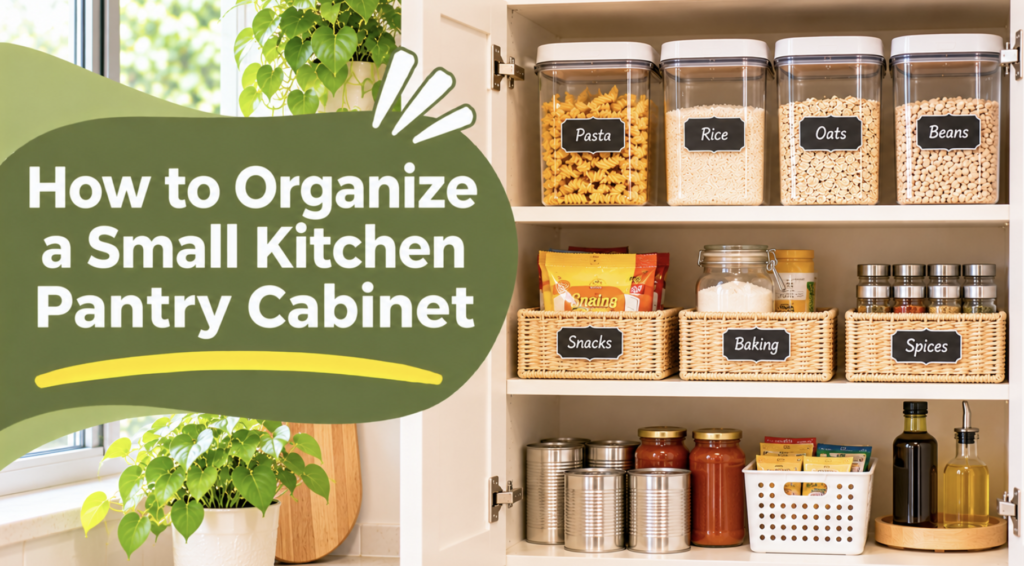
A kitchen pantry doesn't have to be a separate room. Sometimes, it's simply one narrow cabinet holding cereal, pasta, canned goods, snacks, and everything else you need for everyday cooking.
The challenge is that a small pantry cabinet can become overcrowded quickly. Packages get pushed behind other products, shelves become difficult to access, and finding a particular ingredient takes longer than it should.
The good news is that you can create a more functional pantry without expanding your kitchen or purchasing an expensive storage system.
The best way to organize a small kitchen pantry cabinet is to group similar foods, assign each shelf a purpose, and make frequently used products easy to reach.
Here are practical ways to make your limited pantry space work better.
1. Empty the Cabinet and Check Your Food Supplies
Start by removing everything from the pantry cabinet.
Place the products on a clean surface so you can see exactly what you have.
Group similar items together and inspect their packaging, dates, and condition.
Look for duplicate products, damaged packages, and ingredients you rarely use.
Follow the manufacturer's storage instructions and discard food that is unsafe or unsuitable for consumption.
Once the cabinet is empty, clean the shelves and allow them to dry completely.
This step helps you understand how much storage space is actually available before introducing additional organizers.
2. Assign a Purpose to Each Shelf
A small pantry becomes easier to maintain when every shelf has a clear function.
For example, you could use this arrangement:
- Top shelf: Lightweight, occasional-use ingredients.
- Middle shelf: Everyday dry goods and breakfast products.
- Lower shelf: Canned foods and heavier packages.
- Bottom section: Suitable bulk items or additional food storage containers.
Adjust this arrangement according to the cabinet's dimensions and your household's needs.
Keep frequently used products at comfortable heights and avoid placing heavy items on shelves that are difficult to reach.
The goal is to make everyday ingredients accessible without moving several other products.
3. Group Similar Foods Together
One of the easiest ways to reduce pantry clutter is to create simple food categories.
You might organize products into groups such as:
- Pasta, rice, and grains.
- Breakfast cereals and oatmeal.
- Baking ingredients.
- Canned vegetables and beans.
- Snacks and crackers.
- Cooking oils and suitable condiments.
Use categories that reflect the foods you actually purchase.
You don't need a separate basket for every product.
A few clearly defined groups are usually easier to maintain than a complicated system with too many compartments.
4. Use Small Baskets for Loose Packages
Individual food packages can easily become scattered across a narrow cabinet.
Small baskets can help group similar products and prevent them from spreading across the shelves.
For example, one basket might hold snack packets, while another contains baking supplies.
Choose containers that fit your cabinet without blocking access to neighboring products.
Make sure baskets are stable and easy to remove.
Avoid placing very heavy items in containers that aren't designed to support their weight.
Labels can also help identify each category without having to move everything around.
5. Use Clear Containers for Suitable Dry Ingredients
Transparent containers can make it easier to see how much rice, pasta, flour, or another suitable dry ingredient remains.
Choose food-safe containers with appropriate lids and make sure they're clean and completely dry before use.
If you transfer products from their original packaging, retain important information such as ingredients, allergens, preparation instructions, and relevant dates.
You can use labels that identify the product and its storage details.
Not every food needs to be transferred into a decorative container.
For some products, keeping the original packaging is the simplest way to preserve important information.
6. Make Better Use of Narrow Cabinet Shelves
Small pantry cabinets sometimes have shelves that are difficult to use because their dimensions don't match the products being stored.
A suitable shelf riser can create another level for lightweight packages or smaller containers.
Adjustable shelf organizers may also help separate products of different sizes.
Before purchasing anything, measure the available width, depth, and height.
Check the organizer's stability and weight capacity.
Avoid creating tall stacks that could fall when the cabinet door opens.
Sometimes rearranging existing products is enough to make the shelf more practical.
7. Keep Canned Foods Organized and Accessible
Canned goods can take up a considerable amount of space in a small pantry.
Group similar products together, such as vegetables, soups, fruits, and beans.
Arrange them so product labels remain visible.
When appropriate, place older products toward the front, following the manufacturer's storage and date guidance.
Inspect cans for swelling, leaking, severe dents, or other signs of damage.
Do not use cans that show signs of compromised packaging.
Keeping similar products together also makes it easier to check your supplies before grocery shopping.
8. Avoid Hiding Products Behind Other Packages
One common pantry problem occurs when taller products are placed in front of smaller ones.
The items at the back become difficult to see and may be forgotten.
Whenever possible, arrange products so labels remain visible.
Use suitable containers to group small packages and keep similar items together.
If the cabinet is particularly deep, consider whether a compatible pull-out organizer would make access easier.
Our guide on how to organize deep kitchen cabinets without wasting space explains how to improve access to hard-to-reach storage areas.
9. Keep Cleaning Products Away From Food
A kitchen pantry should be reserved for appropriate food storage.
Avoid placing household cleaners, detergents, pesticides, or other hazardous chemicals beside food products.
If your kitchen requires a shared storage cabinet, use a separate, secure location for cleaning supplies.
Keep food protected from moisture, heat, and pests.
Always follow the storage instructions provided on product packaging.
These simple precautions help maintain a more suitable food storage environment.
10. Create a Simple Pantry Maintenance Routine
An organized pantry only works when products are returned to their designated locations.
After grocery shopping, place new items behind older suitable products when appropriate.
Check existing supplies before buying additional packages.
Wipe up spills promptly and inspect shelves periodically for moisture or signs of pests.
You don't need to reorganize the entire cabinet every week.
A short review every few weeks can help identify overcrowded sections and products that need attention.
Final Thoughts
Organizing a small kitchen pantry cabinet doesn't require a large budget or a complete kitchen renovation.
Start by reviewing your food supplies, grouping similar products, and assigning each shelf a clear purpose.
Use baskets and containers only when they improve accessibility, and always preserve important food information when transferring products.
With a simple arrangement and consistent maintenance, even one small cabinet can become a practical pantry that makes everyday cooking and grocery planning easier.
Leave a Reply