
How to Organize Kitchen Cabinets for Everyday Use
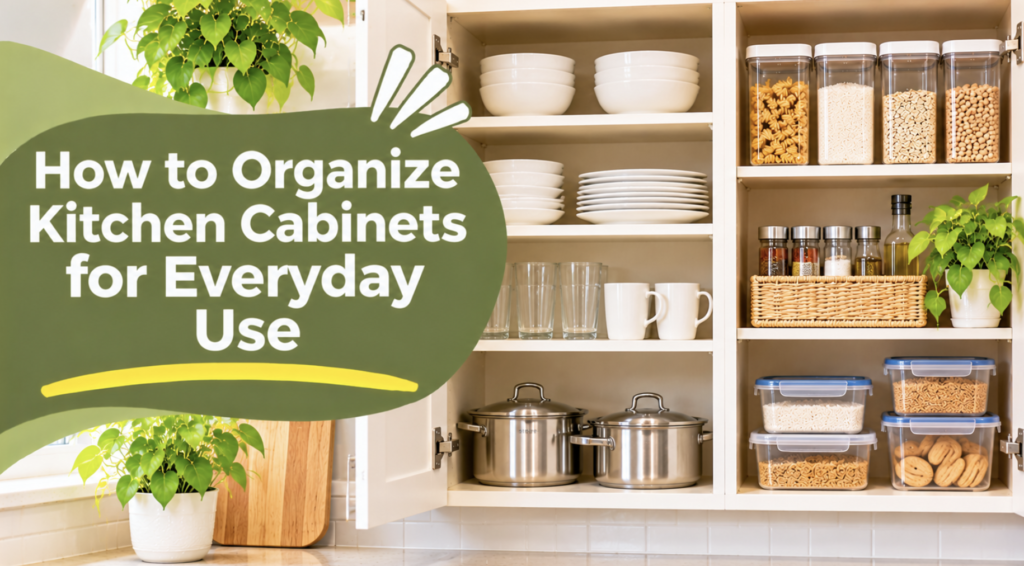
Kitchen cabinets can become difficult to manage when plates, glasses, cookware, food containers, and everyday supplies are stored without a clear arrangement.
You might find yourself reaching behind several bowls to grab a plate or opening multiple cabinets just to locate a measuring cup. Even a kitchen with reasonable storage can feel disorganized when frequently used items don't have consistent locations.
The solution is to arrange your cabinets around the activities you perform every day.
The best way to organize kitchen cabinets for everyday use is to create practical storage zones, group similar belongings, and keep frequently used items within comfortable reach.
Here's how to create a kitchen storage system that makes daily cooking, cleaning, and meal preparation easier.
1. Review Everything Before Rearranging
Start by opening each kitchen cabinet and reviewing its contents.
Remove items one section at a time so you can work without emptying your entire kitchen.
Group similar belongings together, including dishes, glasses, cookware, food containers, and pantry supplies.
Look for damaged items, unnecessary duplicates, and belongings that would be more useful elsewhere.
Clean the shelves and allow them to dry before returning anything.
This process helps you understand how much storage space you actually have and prevents you from organizing items you no longer need.
2. Create Zones Based on Daily Activities
Instead of assigning cabinets randomly, think about how you use your kitchen.
A practical arrangement might include:
- Dish zone: Plates, bowls, and everyday serving dishes.
- Drink zone: Glasses, mugs, and frequently used drink accessories.
- Cooking zone: Pots, pans, and cooking utensils.
- Food preparation zone: Mixing bowls, measuring cups, and cutting accessories.
- Food storage zone: Suitable containers and pantry ingredients.
Keep related items close to where they're normally used.
For example, placing everyday plates near the dishwasher or dish-drying area may make putting them away more convenient.
3. Organize Plates and Bowls by Frequency of Use
Everyday dishes should occupy accessible cabinet space.
Keep frequently used plates and bowls together rather than distributing them across several shelves.
Stack compatible dishes carefully and avoid creating piles that are too tall or unstable.
If different household members use the kitchen, arrange commonly used dishes at comfortable heights.
Occasional-use serving dishes can occupy less accessible shelves, provided they can still be retrieved safely.
A shelf riser may help separate smaller bowls from larger plates when the cabinet has sufficient clearance.
4. Give Glasses and Mugs a Dedicated Location
Drinking glasses and coffee mugs are easier to manage when they have a consistent storage area.
Group similar glassware together and avoid overcrowding shelves.
Place frequently used mugs somewhere convenient for preparing drinks.
Keep heavier or less frequently used glassware in stable positions where it is easy to reach without moving several other objects.
Before adding hanging mug racks or shelf accessories, check their weight limits and compatibility with your cabinets.
The goal is to make everyday drink preparation simple without creating unnecessary clutter.
5. Keep Cooking Essentials Near the Stove
Pots, pans, and frequently used cooking utensils should be easy to access while preparing meals.
If possible, dedicate a cabinet near the cooking area to essential cookware.
Store compatible pots together and keep their lids organized separately when necessary.
Avoid unstable stacks or arrangements that require lifting several heavy objects to retrieve one pan.
For more detailed advice, see our guide on how to organize pots and pans in small kitchen cabinets.
Keep the area around the stove free from unnecessary objects and follow appliance clearance requirements.
6. Arrange Food Storage Containers Together
Food containers often become scattered between different cabinets and drawers.
Choose one designated storage area for compatible containers and their lids.
Nest containers when their design allows and separate lids using a suitable organizer.
Keep frequently used sizes accessible.
Make sure food storage containers are clean and completely dry before putting them away.
If you have limited cabinet space, consider whether some suitable containers can be stored in a deep drawer instead.
7. Make Better Use of Vertical Cabinet Space
Many kitchen cabinets have unused space between shelves.
A suitable shelf riser can create an additional level for lightweight dishes, cups, or small containers.
Vertical organizers may also help separate baking trays and cutting boards.
Measure the cabinet before purchasing accessories and check their stability and weight capacity.
Avoid placing heavy objects on high shelves or creating arrangements that could fall when the cabinet door opens.
Sometimes adjusting existing shelf heights is enough to improve storage without purchasing anything.
8. Keep Everyday Cleaning Supplies in an Appropriate Location
Kitchen cleaning accessories should have a designated storage area separate from food and dishes.
You might use a cabinet near the sink for appropriate cleaning products, sponges, and cloths.
Keep chemicals in their original labeled containers and follow their storage instructions.
Never mix cleaning products, and keep hazardous supplies inaccessible to children and pets.
For additional storage ideas, read our guide on how to organize kitchen cabinets under the sink.
9. Avoid Overcrowding Your Cabinets
One common mistake is trying to fit every kitchen belonging into the most convenient cabinets.
This makes frequently used items harder to retrieve and can create unstable stacks.
Review whether occasional-use appliances, specialty cookware, and seasonal serving pieces could be stored elsewhere.
Keep enough room to remove dishes and containers comfortably.
If your kitchen has limited storage, our guide on how to organize a small kitchen with limited cabinets provides additional ideas for making better use of existing space.
Remember that accessible storage is more useful than a completely full cabinet.
10. Maintain Your Cabinet Organization System
Once everything has a designated location, return items to their assigned sections after use.
When purchasing new kitchen supplies, decide where they will be stored before bringing them into the kitchen.
Periodically review shelves and drawers for misplaced belongings or overcrowded sections.
If one cabinet repeatedly becomes messy, reconsider whether its contents match the activities performed nearby.
A simple arrangement that reflects your everyday routine is easier to maintain than a complicated organizing system.
Final Thoughts
Organizing kitchen cabinets for everyday use starts with understanding how you prepare meals, store food, and use your kitchen.
Create practical zones, group similar belongings, and keep frequently used items within comfortable reach.
Use shelf organizers only when they improve accessibility, and avoid overcrowding cabinets with unnecessary accessories.
With a thoughtful layout and consistent habits, your kitchen cabinets can become easier to use and maintain every day.
Leave a Reply