
How to Organize Kitchen Cabinets Under the Sink
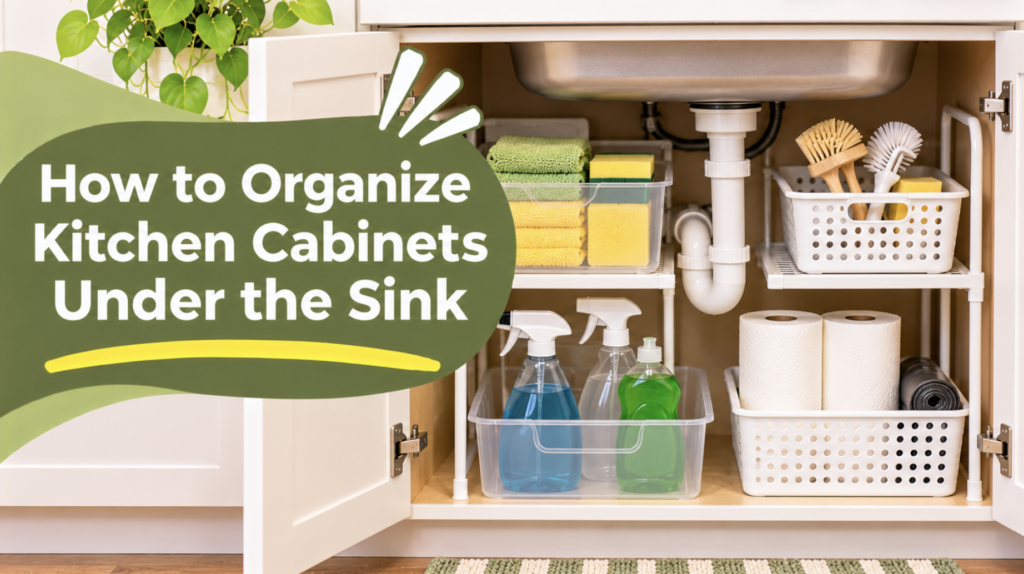
The cabinet underneath your kitchen sink can quickly become one of the messiest spaces in your home. Cleaning sprays, dish soap, sponges, trash bags, and miscellaneous supplies often end up pushed together around the plumbing.
Because the cabinet has pipes running through its center, organizing it can be more challenging than arranging an ordinary kitchen shelf.
The good news is that you can make this space much more functional without installing expensive storage systems.
The best way to organize kitchen cabinets under the sink is to create separate storage zones, choose organizers that fit around the plumbing, and keep cleaning products protected from moisture and leaks.
Here are practical ways to transform this overlooked cabinet into a more useful storage area.
1. Empty the Cabinet and Inspect the Space
Start by removing everything stored underneath the sink.
Place the products on a nearby surface and group them by category.
Check bottles for leaks, damaged packaging, and expired or unwanted products. Dispose of household chemicals according to their labels and local disposal guidelines.
Next, inspect the cabinet interior.
Look for moisture, water stains, damaged flooring, or signs of plumbing leaks.
Clean the surface and allow it to dry completely before returning anything.
If you notice an active leak or persistent moisture, address that problem before installing storage accessories.
2. Measure Around the Plumbing
Unlike ordinary kitchen cabinets, the space underneath a sink has pipes that can interfere with organizers.
Measure the cabinet's width, depth, and available height.
Pay particular attention to the space on either side of the drainpipe and the location of water supply lines.
Look for organizers designed specifically for under-sink cabinets.
Some adjustable systems have U-shaped or sliding shelves that accommodate plumbing while providing additional storage.
Before purchasing anything, check the product dimensions, installation requirements, and weight capacity.
An organizer should fit around the plumbing without putting pressure on pipes or restricting access to valves.
3. Create Separate Cleaning Supply Zones
Instead of placing every product together, divide the cabinet into practical sections.
For example:
- Dishwashing supplies: Dish soap and suitable cleaning accessories.
- Surface cleaning: Products intended for kitchen surfaces.
- Cleaning tools: Sponges, brushes, and reusable cloths.
- Extra supplies: Replacement sponges, gloves, and trash bags.
Keep frequently used items in the easiest-to-reach locations.
Store products according to their labels and never combine different cleaning chemicals.
Keep household cleaning products separate from food, dishes, and food preparation accessories.
4. Use Bins to Group Small Cleaning Items
Small cleaning accessories can become scattered when they're stored loose.
A suitable plastic bin or washable container can keep sponges, brushes, and cloths together.
Choose containers that fit comfortably around the plumbing and can be removed easily.
Avoid using materials that absorb moisture or become damaged when exposed to occasional splashes.
It's also useful to keep clean accessories separate from used or damp cleaning cloths.
Allow reusable sponges and cloths to dry appropriately before storing them.
5. Choose an Adjustable Under-Sink Organizer
An adjustable organizer can help you use the space on either side of the pipes.
Depending on the cabinet design, a two-level system may provide separate areas for bottles and smaller accessories.
Pull-out baskets can also make products easier to reach, especially toward the back of deeper cabinets.
Before installing one, check that it doesn't obstruct plumbing connections, shutoff valves, or cabinet doors.
Follow the manufacturer's installation instructions and weight limits.
You don't need an organizer on every side of the cabinet. Sometimes one well-positioned shelf is enough.
6. Keep Cleaning Bottles Upright and Secure
Spray bottles and liquid cleaning products should be stored in a stable position.
Use a suitable bin or organizer to prevent bottles from tipping over when the cabinet door opens.
Keep containers in their original packaging with labels intact.
Avoid transferring cleaning products into unmarked bottles, food containers, or drink containers.
Never remove important safety instructions from chemical products.
If a product leaks, follow its label instructions for safe cleanup and disposal.
7. Protect the Cabinet From Moisture
The area underneath the sink is more exposed to moisture than most kitchen storage spaces.
A properly sized waterproof cabinet liner or tray may help protect the cabinet floor from minor spills.
However, liners don't replace regular inspections or plumbing maintenance.
Check around the drainpipe and water connections periodically.
If you notice dampness, unusual odors, or water damage, investigate the source rather than simply covering the affected area.
Keep the cabinet reasonably dry and avoid storing wet cloths or dripping sponges inside it.
8. Make Use of the Cabinet Door Carefully
The inside of a cabinet door may provide additional space for lightweight cleaning accessories.
A suitable door-mounted organizer can sometimes hold gloves, small brushes, or other compact items.
Before installing one, check the door's construction and the available clearance.
Make sure the organizer won't interfere with plumbing or prevent the door from closing.
Follow the manufacturer's installation instructions and weight restrictions.
Avoid hanging heavy bottles or sharp tools from an unsupported door.
9. Store Household Chemicals Safely
Safety should be a priority when organizing cleaning supplies.
Keep products in their original, labeled containers and follow the storage instructions on each label.
Never mix cleaning products, particularly bleach with ammonia or acids, because dangerous gases can result.
Keep chemicals away from food and cooking supplies.
If children or pets live in your home, use appropriate child-resistant storage and keep hazardous products inaccessible to them.
An organized cabinet should make supplies easier to locate without making them easier for children or pets to access.
10. Maintain the Cabinet With a Simple Routine
Once the cabinet is organized, take a few minutes to review it regularly.
Return products to their designated bins after use.
Check bottles for leaks and inspect the cabinet floor for signs of moisture.
Remove empty packaging and replace supplies when necessary.
Periodically confirm that valves and plumbing connections remain accessible.
If an organizer repeatedly gets in the way, adjust its position rather than forcing the same arrangement to work.
Final Thoughts
Organizing kitchen cabinets under the sink requires a little more planning because plumbing, moisture, and cleaning products all need consideration.
Start by inspecting the cabinet, measuring around the pipes, and creating separate storage zones.
Use suitable bins and adjustable organizers where they genuinely improve accessibility.
Most importantly, keep cleaning chemicals properly labeled, protected, and away from food.
With a practical arrangement and occasional maintenance, the space underneath your kitchen sink can become much easier to manage.
Leave a Reply