
How to Organize a Small Kitchen Countertop Without Clutter
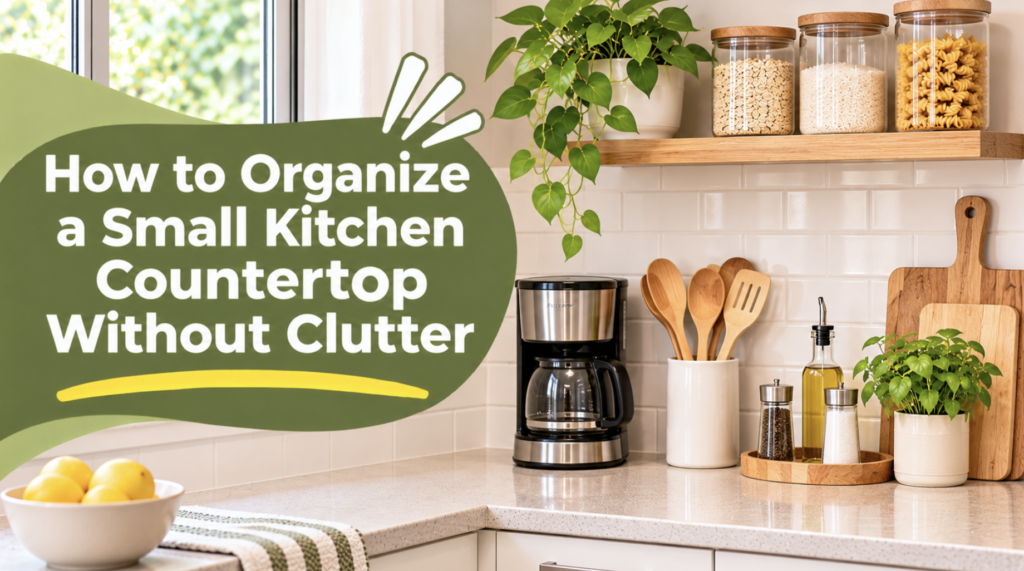
A small kitchen countertop can become crowded surprisingly fast. A coffee maker takes up one corner, cooking utensils occupy another, and groceries or small appliances seem to appear wherever there's an empty spot.
Before long, there's barely enough room to prepare a meal.
The solution isn't necessarily removing everything or buying additional storage furniture. It's deciding which items deserve a permanent place on the counter and finding better locations for everything else.
The best way to organize a small kitchen countertop is to keep daily essentials accessible, relocate occasional-use appliances, and protect enough open space for food preparation.
Here are practical ways to make your kitchen surfaces more functional without making the room feel crowded.
1. Remove Everything That Doesn't Need to Stay
Start by clearing your countertops completely, except for items that cannot be moved easily.
Place the remaining belongings on a table or another clean surface.
Group them into categories such as appliances, cooking accessories, food products, and decorative objects.
Now consider how frequently you use each item.
A coffee maker used every morning may deserve a permanent location. An appliance used once or twice a month probably doesn't need to occupy valuable preparation space.
Return essential items gradually and store the rest in suitable cabinets or drawers.
This simple exercise often reveals how much countertop space was being used by things that didn't need to be there.
2. Divide Your Countertop Into Functional Zones
Instead of arranging objects randomly, create small areas based on kitchen activities.
For example:
- Coffee zone: Coffee maker, cups, and everyday coffee supplies.
- Cooking zone: A small utensil holder and frequently used cooking essentials.
- Preparation zone: An open area for chopping, mixing, and preparing ingredients.
- Cleaning zone: Dish soap and other necessary cleaning supplies near the sink.
You don't need to create a separate section for everything.
The purpose is to make each part of the countertop serve a clear function.
Keep enough open surface available for the tasks you perform most often.
3. Choose Which Appliances Deserve Counter Space
Small appliances can consume a surprising amount of room.
Review what you use regularly before deciding where everything belongs.
Items such as a coffee maker or toaster may justify a permanent location if they're part of your daily routine.
Less frequently used appliances, such as specialty mixers or food processors, may fit better in an appropriate cabinet.
Before storing an appliance, make sure it is completely cool, clean, dry, and suitable for that storage location.
Follow its manufacturer's instructions, especially regarding ventilation and electrical safety.
Never operate an appliance in a location that blocks required ventilation or creates a safety hazard.
4. Use a Tray to Group Small Accessories
Small objects can make a countertop look cluttered even when there aren't many of them.
A suitable tray can keep frequently used accessories together.
For example, you might place cooking oil, salt, and pepper in one designated area.
This creates a defined location for everyday essentials and makes cleaning the surrounding surface easier.
Choose a tray that fits comfortably without occupying too much preparation space.
Avoid grouping items that need different storage conditions simply because they look attractive together.
5. Move Cooking Utensils Into One Convenient Location
Spatulas, wooden spoons, ladles, and similar tools often end up scattered around the cooking area.
A suitable utensil holder can keep frequently used tools together.
Place it somewhere convenient without interfering with the stove, food preparation area, or other appliances.
Only keep the utensils you regularly use on the counter.
Store additional tools in an appropriate drawer.
For more ideas about drawer layouts, read our guide on how to organize kitchen drawers.
6. Use Wall Space Without Overcrowding It
When countertop space is limited, suitable wall storage may help.
Depending on your kitchen layout, a properly installed rail, shelf, or hook system can hold selected lightweight accessories.
However, not every wall is suitable for additional storage.
Check the wall material, installation requirements, weight limits, and clearance before mounting anything.
Keep items away from heat sources and areas where they could interfere with cooking.
If drilling isn't permitted or practical, a freestanding organizer may be a better option.
The goal is to move selected belongings off the counter without creating another crowded area.
7. Keep Cutting Boards and Large Accessories Organized
Cutting boards, baking trays, and serving boards can occupy valuable space when left flat on the countertop.
If your kitchen has suitable cabinet space, consider storing them vertically in an appropriate rack or divider.
Make sure each item is clean and completely dry before storing it.
Choose an organizer that supports the boards securely and prevents them from falling.
If you use a cutting board frequently, keep it somewhere accessible without leaving it permanently on your main preparation surface.
8. Avoid Turning the Countertop Into a Pantry
Food packages and groceries often accumulate on kitchen counters because pantry storage is limited.
However, storing too many food products on the countertop can make the kitchen feel crowded.
Review which foods are suitable for countertop storage and follow their packaging instructions.
Move appropriate dry goods into a suitable pantry or cabinet.
Keep refrigerated foods at the correct temperature and avoid leaving perishable groceries on the counter.
Our guide on small pantry organization ideas for beginners explains how to make limited food storage space more practical.
9. Keep the Area Around the Sink and Stove Clear
The sink and stove are two areas where countertop organization needs special attention.
Avoid storing unnecessary objects around the sink where they can interfere with cleaning or accumulate moisture.
Keep the cooking area clear of items that could create a fire hazard.
Follow the appliance manufacturer's clearance and ventilation requirements.
Also avoid placing paper products, loose packaging, and unsuitable containers near hot surfaces.
A clear arrangement makes everyday kitchen activities easier and safer.
10. Create a Simple Daily Countertop Reset
Even a well-organized countertop can become cluttered after several meals.
A short daily routine can help prevent this.
After preparing food:
- Return cooking utensils to their designated locations.
- Put away appliances that aren't needed permanently.
- Remove packaging and unnecessary objects.
- Wipe appropriate surfaces with suitable cleaning products.
- Check that essential preparation areas remain accessible.
If a particular corner repeatedly becomes crowded, reconsider whether the objects stored there have a better location.
Small adjustments are often more effective than buying another organizer.
Final Thoughts
Organizing a small kitchen countertop isn't about removing every object.
It's about keeping the items you genuinely use within reach while protecting enough open space for cooking and cleaning.
Create functional zones, relocate occasional-use appliances, and use suitable organizers only when they solve a real problem.
With a little planning and a simple maintenance routine, even a small kitchen countertop can become a comfortable and practical workspace.
Leave a Reply