
How to Organize Kitchen Drawers for Maximum Space
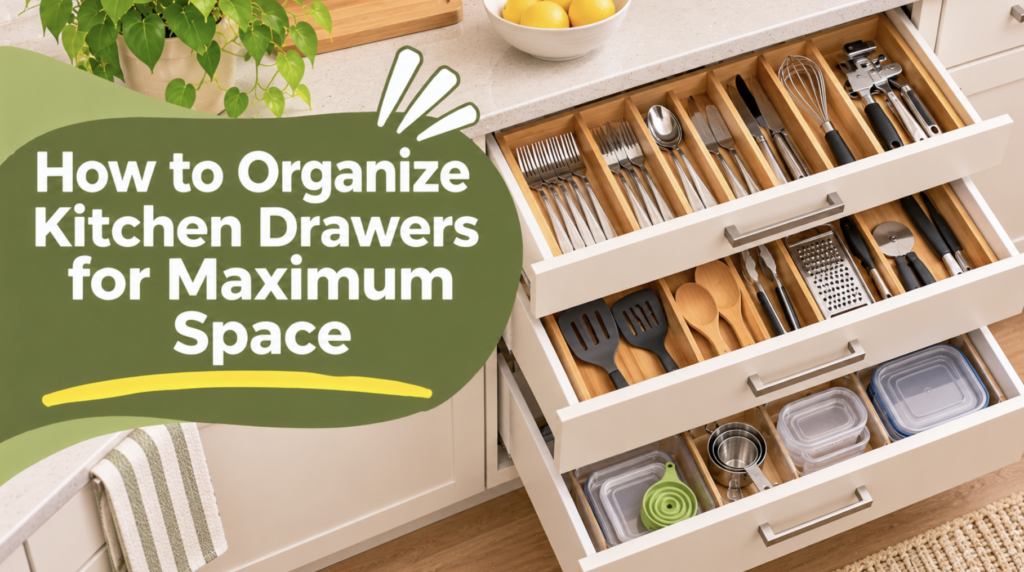
Kitchen drawers are supposed to make everyday cooking easier, but they can quickly become crowded with utensils, cutlery, measuring tools, and miscellaneous accessories.
You open a drawer looking for a spatula and end up moving three other items just to reach it. Small tools disappear beneath larger ones, and dividers that once seemed useful no longer fit everything.
The solution isn't necessarily buying more organizers. It's creating a layout that gives every category a clear place.
The best way to organize kitchen drawers is to sort items by function, assign each drawer a purpose, and use dividers that fit the available space.
Here's how to make your kitchen drawers more practical without wasting valuable storage space.
1. Empty and Clean One Drawer at a Time
Start with the drawer that causes the most frustration.
Remove everything and place the contents on a clean countertop.
Separate items into groups such as cutlery, cooking utensils, measuring tools, and food storage accessories.
Look for duplicate tools, damaged utensils, and belongings that would be more useful elsewhere.
Wipe the drawer interior and let it dry before returning anything.
Working on one drawer at a time keeps the kitchen manageable and prevents every surface from becoming covered in belongings.
2. Give Each Drawer a Specific Purpose
One of the easiest ways to prevent clutter is to assign a clear function to each drawer.
For example, a kitchen with three main drawers might use this arrangement:
- Top drawer: Everyday cutlery and small utensils.
- Middle drawer: Cooking tools such as spatulas and serving spoons.
- Bottom drawer: Larger accessories, measuring tools, or suitable food storage items.
This is only a starting point. Your actual layout should depend on drawer dimensions and where you prepare food.
Keep frequently used tools near the area where you normally cook.
3. Use a Cutlery Organizer for Everyday Items
Forks, knives, and spoons are easier to find when they have separate compartments.
A cutlery tray can prevent these items from becoming mixed together.
Measure the inside of the drawer before choosing one. Pay attention to the available width, depth, and height.
If your drawer has an unusual shape, an adjustable organizer may be more suitable.
You don't need an oversized tray if you only own a basic set of cutlery.
Choose a layout that allows each item to be retrieved without disturbing the others.
4. Separate Cooking Utensils by Function
Spatulas, ladles, whisks, tongs, and serving spoons often end up mixed together.
Group similar tools in separate sections of a drawer.
For example, keep frequently used cooking utensils together and place occasional-use baking tools in another section.
Large utensils may require a deeper drawer.
Avoid forcing tools into compartments that are too small, especially when sharp edges could become exposed.
If your drawer cannot comfortably accommodate everything, consider storing some tools in a suitable utensil holder near the cooking area.
5. Use Drawer Dividers Only Where They Help
Drawer dividers can create separate sections for accessories that would otherwise become mixed together.
They're particularly useful for measuring spoons, peelers, kitchen scissors, and small preparation tools.
However, too many dividers can actually reduce usable space.
Before purchasing them, measure the drawer and decide exactly which categories need separation.
Adjustable dividers may be useful when drawer dimensions aren't standard.
You can also reuse small, clean containers if they're stable and appropriate for the items being stored.
6. Organize Measuring Tools Together
Measuring cups and spoons are easy to misplace when stored throughout the kitchen.
Keep them together in one accessible compartment.
If the measuring spoons have rings or handles, make sure they're stored in a way that prevents them from becoming tangled.
Separate larger measuring cups from smaller accessories when necessary.
Place the tools near your usual food preparation area so they're easy to retrieve when following recipes.
7. Make Better Use of Deep Drawers
Deep kitchen drawers can accommodate larger items, but they can also become difficult to manage when everything is stacked together.
Use suitable containers or adjustable dividers to create separate sections.
Larger tools, mixing accessories, and compatible food storage items may fit well in deeper drawers.
Keep heavier objects stable and avoid creating tall piles that could shift when the drawer opens.
If you store containers in these drawers, keep compatible lids together.
Our guide on organizing deep kitchen cabinets without wasting space explains additional ways to make deep kitchen storage more accessible.
8. Remove Items That Don't Belong in Drawers
Not every kitchen accessory needs to occupy drawer space.
Bulky appliances, large cookware, and occasional-use serving dishes may fit better in suitable cabinets.
Review each item and ask whether a drawer is really the most practical place for it.
For example, an electric appliance that takes up an entire drawer may be better stored in an appropriate cabinet.
If your kitchen has limited storage, our guide to organizing a small kitchen with limited cabinets offers additional storage ideas.
9. Keep Sharp Tools Stored Safely
Kitchen knives, peelers, and other sharp tools need appropriate storage.
Use a suitable knife organizer, protective sheath, or another storage solution designed for the specific tool.
Avoid placing loose blades among everyday cutlery.
Make sure sharp utensils cannot shift into positions where someone might accidentally reach into them.
If you have children at home, consider appropriate child-resistant storage and keep dangerous kitchen tools inaccessible to them.
10. Maintain Your Drawers With a Simple Routine
Once your drawers are organized, return each item to its assigned compartment after use.
Avoid placing new kitchen accessories wherever an empty space appears.
When purchasing a new utensil, check whether something else should be relocated or removed.
Every few weeks, straighten the compartments and remove items that no longer belong there.
A consistent arrangement makes everyday cooking easier and reduces the need for repeated reorganizing.
Final Thoughts
Organizing kitchen drawers for maximum space doesn't require complicated storage systems.
Start by grouping similar items, assigning each drawer a clear purpose, and choosing dividers that fit your actual dimensions.
Keep frequently used tools accessible and store sharp accessories safely.
The goal isn't to fill every compartment. It's to create a practical arrangement where you can find what you need without searching through a crowded drawer.